


Page 71 - Demo
P. 71
MATTHEW -
shall love the Lord, your God, with all your heart, with all your soul, and with all your mind. 38This is the greatest and the first commandment. 39k The second is like it:* You shall love your neighbor as yourself. 40* l The whole law and the prophets depend on these two commandments.”
The Question About David’s Son.* 41m While the Pharisees were gathered together, Jesus questioned them,* 42* saying, “What is your opinion about the Messiah? Whose son is he?” They replied, “David’s.” 43He said to them, “How, then, does David, inspired by the Spirit, call him ‘lord,’ saying:
44n ‘The Lord said to my lord,
“Sit at my right hand
until I place your enemies under your feet”’?
45* If David calls him ‘lord,’ how can he be his son?” 46o No one was able to answer him a word, nor from that day on did anyone dare to ask him any more questions.
23* 1a Then Jesus spoke to the crowds and to his disciples, 2* saying, “The scribes and the Pharisees have taken their seat on the chair of Moses. 3Therefore, do and observe all things whatsoever they tell you, but do not follow their example. For they preach but they do not practice. 4b They tie up heavy burdens* [hard to carry]
Denunciation of the Scribes and Pharisees.
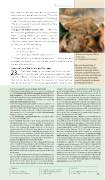
Moses receiving the Tablets of the Law,
by Giambattista Farinari
We sense the gathering of
the forces that will put Jesus
to death. Increasingly, he nds himself in con ict with the chief priests and scribes, both Pharisees and Sadducees, welcomed by some of the people, but greeted with hostility by others.
God must engage the total person (heart, soul, mind).
* [22:39] Jesus goes beyond the extent of the question put to him and joins to the greatest and the rst commandment a second, that of love of neighbor, Lv 19:18; see note on Mt 19:18–19. This combination
of the two commandments may already have been made in Judaism.
* [22:40] The double commandment is the source from which the
whole law and the prophets are derived.
* [22:41–46] Having answered the questions of his opponents in the
preceding three controversies, Jesus now puts a question to them about the sonship of the Messiah. Their easy response (Mt 22:43a) is countered by his quoting a verse of Ps 110 that raises a problem for their response (43b–45). They are unable to solve it and from that day on their questioning of him is ended.
* [22:41] The Pharisees. . .questioned them: Mark is not speci c about who are questioned (Mk 12:35).
* [22:42–44] David’s: this view of the Pharisees was based on such Old Testament texts as Is 11:1–9; Jer 23:5; and Ez 34:23; see also the extrabiblical Psalms of Solomon 17:21. How, then. . .saying: Jesus cites Ps 110:1 accepting the Davidic authorship of the psalm, a common view of his time. The psalm was probably composed for the enthronement of a Davidic king of Judah. Matthew assumes that the Pharisees interpret it as referring to the Messiah, although there is no clear evidence that it was so interpreted in the Judaism of Jesus’ time. It was widely used in the early church as referring to the exaltation of the risen Jesus. My lord: understood as the Messiah.
* [22:45] Since Matthew presents Jesus both as Messiah (Mt 16:16) and as Son of David (Mt 1:1; see also note on Mt 9:27), the question is not meant to imply Jesus’ denial of Davidic sonship. It probably means that although he is the Son of David, he is someone greater, Son of Man and Son of God, and recognized as greater by David who calls him my ‘lord.’
* [23:1–39] The nal section of the narrative part of the fth book of the gospel is a denunciation by Jesus of the scribes and the Pharisees (see note on Mt 3:7). It depends in part on Mark and Q (cf. Mk 12:38–39; Lk 11:37–52; 13:34–35), but in the main it is peculiar to Matthew. (For the reasons against considering this extensive body of sayings-
material either as one of the structural discourses of this gospel or as part of the one that follows in Mt 24–25, see note on Mt 19:1–23:39.) While the tradition of a deep opposition between Jesus and the Pharisees is well founded, this speech re ects an opposition that goes beyond that of Jesus’ ministry and must be seen as expressing the bitter con ict between Pharisaic Judaism and the church of Matthew at the time when the gospel was composed. The complaint often made that the speech ignores the positive qualities of Pharisaism and of its better representatives is true, but the complaint overlooks the circumstances that gave rise to the invective. Nor is the speech purely anti-Pharisaic. The evangelist discerns in his church many of the same faults that he nds in its opponents and warns his fellow Christians to look to their own conduct and attitudes.
* [23:2–3] Have taken their seat. . .Moses: it is uncertain whether this is simply a metaphor for Mosaic teaching authority or refers to an actual chair on which the teacher sat. It has been proved that there was a seat so designated in synagogues of a later period than that of this gospel. Do and observe. . .they tell you: since the Matthean Jesus abrogates Mosaic law (Mt 5:31–42), warns his disciples against the teaching of the Pharisees (Mt 14:1–12), and, in this speech, denounces the Pharisees as blind guides in respect to their teaching on oaths (Mt 23:16–22), this commandment to observe all things whatsoever they (the scribes and Pharisees) tell you cannot be taken as the evangelist’s understanding of the proper standard of conduct for his church. The saying may re ect a period when the Matthean community was largely Jewish Christian and was still seeking to avoid a complete break with the synagogue. Matthew has incorporated this traditional material into the speech in accordance with his view of the course of salvation history, in which he portrays the time of Jesus’ ministry as marked by the delity to the law, although with signi cant pointers to the new situation that would exist after his death and resurrection (see note on Mt 5:17–20). The crowds and the disciples (Mt 23:1) are exhorted not to follow the example of the Jewish leaders, whose deeds do not conform to their teaching (Mt 23:3).* [23:4] Tie up heavy burdens: see note on Mt 11:28.*
Chapter 22
k. [22:39] Lv 19:18; Jas 2:8.
l. [22:40] Rom 13:8–10; Gal 5:14.
m. [22:41–46] Mk 12:35–37; Lk 20:41–44. n. [22:44] Ps 110:1; Acts 2:35; Heb 1:13. o. [22:46] Lk 20:40.
Chapter 23
a. [23:1–39] Mk 12:38–39; Lk 11:37–52; 13:34–35.
b. [23:4] Lk 11:46.
59


