


Page 87 - Demo
P. 87
MATTHEW -
of James and Joseph, and the mother of the sons of Zebedee. The Burial of Jesus.* 57a When it was evening, there came a rich man from Arimathea named Joseph, who was himself a disciple of Jesus.b 58He went to Pilate and asked for the body of Jesus; then Pilate ordered it to be handed over. 59Taking the body, Joseph wrapped it [in] clean linen 60and laid it in his new tomb that he had hewn in the rock. Then he rolled a huge stone across the entrance to the tomb and departed. 61But Mary Magdalene and the other Mary remained sitting there, facing the tomb.
The Guard at the Tomb.* 62The next day, the one following the day of preparation,* the chief priests and the Pharisees gathered before Pilate 63c and said, “Sir, we remember that this impostor while still alive said, ‘After three days I will be raised up.’ 64Give orders, then, that the grave be secured until the third day, lest his disciples come and steal him and say to the people, ‘He has been raised from the dead.’ This last imposture would be worse than the first.”* 65Pilate said to them, “The guard is yours;* go secure it as best you can.” 66So they went and secured the tomb by fixing a seal to the stone and setting the guard.
The Resurrection of Jesus.
28
2* b And behold, there was a great earthquake; for an angel of the Lord descended from heaven, approached, rolled back the stone, and sat upon it. 3c His appearance was like lightning and his clothing was white as snow. 4The guards were shaken with fear of him and became like dead men. 5Then the angel said to the women in reply, “Do not be
1a After the sabbath, as the first day of the week was dawning,* Mary Magdalene and the other Mary came to see the tomb.
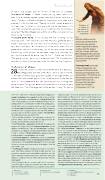
Sculpture of a woman in the church of San Giovanni in Modena
28:4
Both the soldiers and the women are terri ed to nd the tomb empty, but the soldiers respond with denial and fear, and the women
with joy, courage, and hope. Mary Magdalene becomes the “apostle to the apostles” when she is sent to bring the good news to them.
The empty tomb is the sign
of Jesus’ resurrection, the
very heart of Christian faith, the source of forgiveness and reconciliation. “if Christ has not been raised, your faith is vain; you are still in your sins...
But now Christ has been raised from the dead”
(I Corinthians 15:17, 20).
* [27:57–61] Cf. Mk 15:42–47. Matthew drops Mark’s designation of Joseph of Arimathea as “a distinguished member of the council” (the Sanhedrin), and makes him a rich man and a disciple of Jesus. The former may be an allusion to Is 53:9 (the Hebrew reading of that text is disputed and the one followed in the NAB OT has nothing about the rich, but they are mentioned in the LXX version). That the tomb was the new tomb of a rich man and that it was seen by the women are indications of an apologetic intent of Matthew; there could be no question about the identity of Jesus’ burial place. The other Mary: the mother of James and Joseph (Mt 27:56).
* [27:62–66] Peculiar to Matthew. The story prepares for Mt 28:11–15 and the Jewish charge that the tomb was empty because the disciples had stolen the body of Jesus (Mt 28:13, 15).
* [27:62] The next day. . .preparation: the sabbath. According to the synoptic chronology, in that year the day of preparation (for the sabbath) was the Passover; cf. Mk 15:42. The Pharisees: the principal opponents of Jesus during his ministry and, in Matthew’s time, of the Christian church, join with the chief priests to guarantee against a possible attempt of Jesus’ disciples to steal his body.
* [27:64] This last imposture. . .the rst: the claim that Jesus has been raised from the dead is clearly the last imposture; the rst may be either his claim that he would be raised up (Mt 27:63) or his claim that he was the one with whose ministry the kingdom of God had come (see Mt 12:28).
* [27:65] The guard is yours: literally, “have a guard” or “you have a guard.” Either the imperative or the indicative could mean that Pilate granted the petitioners some Roman soldiers as guards, which is the sense of the present translation. However, if the verb is taken as an indicative it could also mean that Pilate told them to use their own Jewish guards.
* [28:1–20] Except for Mt 28:1–8 based on Mk 16:1–8, the material of this nal chapter is peculiar to Matthew. Even where he follows Mark, Matthew has altered his source so greatly that a very di erent
impression is given from that of the Marcan account. The two points that are common to the resurrection testimony of all the gospels are that the tomb of Jesus had been found empty and that the risen Jesus had appeared to certain persons, or, in the original form of Mark, that such an appearance was promised as soon to take place (see Mk 16:7). On this central and all-important basis, Matthew has constructed an account that interprets the resurrection as the turning of the ages (Mt 28:2–4), shows the Jewish opposition to Jesus as continuing to the present in the claim that the resurrection is a deception perpetrated by the disciples who stole his body from the tomb (Mt 28:11–15), and marks a new stage in the mission of the disciples once limited to Israel (Mt 10:5–6); now they are to make disciples of all nations. In this work they will be strengthened by the presence of the exalted Son of Man, who will be with them until the kingdom comes in fullness at the end of the age (Mt 28:16–20).
* [28:1] After the sabbath. . .dawning: since the sabbath ended at sunset, this could mean in the early evening, for dawning can refer to the appearance of the evening star; cf. Lk 23:54. However, it is probable that Matthew means the morning dawn of the day after the sabbath, as in the similar though slightly di erent text of Mark, “when the sun had risen” (Mk 16:2). Mary Magdalene and the other Mary: see notes on Mt 27:55–56; 57–61. To see the tomb: cf. Mk 16:1–2 where the purpose of the women’s visit is to anoint Jesus’ body.
* [28:2–4] Peculiar to Matthew. A great earthquake: see note on Mt 27:51–53. Descended from heaven: this trait is peculiar to Matthew, although his interpretation of the “young man” of his Marcan source (Mk 16:5) as an angel is probably true to Mark’s intention; cf. Lk 24:23 where the “two men” of Mt 24:4 are said to be “angels.” Rolled back the stone. . .upon it: not to allow the risen Jesus to leave the tomb but to make evident that the tomb is empty (see Mt 24:6). Unlike the apocryphal Gospel of Peter (9:35—11:44), the New Testament does not describe the resurrection of Jesus, nor is there anyone who sees it. His appearance was like lightning. . .snow: see note on Mt 17:2.
CHAPTER 27
a. [27:57–61] Mk 15:42–47;
Lk 23:50–56; Jn 19:38–42.
b. [27:57] Is 53:9.
c. [27:63] 12:40; 16:21; 17:23; 20:19.
CHAPTER 28
a. [28:1–10] Mk 16:1–8; Lk 24:1–12; Jn 20:1–10.
b. [28:2] 25:51. 75 c. [28:3] 17:2.


