


Page 96 - Demo
P. 96
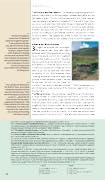
3:1 The word “synagogue” comes from a Greek word meaning “to gather together.” It was a place where Jews who were far from the Temple in Jerusalem came together for prayer, song, and study of the Scriptures. In healing the man with a withered hand, Jesus interprets the meaning of the commandment of sabbath- rest in a new way. It is a time for rest, but also a time to give others rest and freedom, by doing good.
3:6 This is Mark’s rst reference to the death of Jesus. Jesus’ deeds and words constantly call into question the status quo. Those who hold religious and political authority—people like the Pharisees and the Herodians, supporters of King Herod—feel threatened when the status quo is threatened. This con ict will intensify as the news of what Jesus is doing and teaching continues to spread.
MARK .
The Disciples and the Sabbath.* 23As he was passing through a field of grain on the sabbath, his disciples began to make a path while picking the heads of grain.f 24At this the Pharisees said to him, “Look, why are they doing what is unlawful on the sabbath?”g 25He said to them, “Have you never read what David did* when he was in need and he and his companions were hungry? 26How he went into the house of God when Abiathar was high priest and ate the bread of offering that only the priests could lawfully eat, and shared it with his companions?”h 27Then he said to them, “The sabbath was made for man,* not man for the sabbath.i 28* That is why the Son of Man is lord even of the sabbath.”
3A Man with a Withered Hand.
1* Again he entered the synagogue.a
There was a man there who had a
withered hand. 2They watched him closely
to see if he would cure him on the sabbath
so that they might accuse him. 3He said to
the man with the withered hand, “Come up
here before us.” 4Then he said to them, “Is
it lawful to do good on the sabbath rather
than to do evil, to save life rather than
to destroy it?” But they remained silent.
5Looking around at them with anger and
grieved at their hardness of heart, he said
to the man, “Stretch out your hand.” He
stretched it out and his hand was restored.b 6* The Pharisees went out and immediately took counsel with the Herodians against him to put him to death.
The Mercy of Jesus. 7*Jesus withdrew toward the sea with his disciples.c A large number of people [followed] from Galilee and from Judea. 8Hearing what he was doing, a large number of people came to him also from Jerusalem, from Idumea, from beyond the Jordan, and from the neighborhood of Tyre and Sidon. 9He told his disciples to have a boat ready for him because of the crowd, so that they would not crush him. 10He had cured many and, as a result, those who had diseases were pressing upon him to touch him.d 11* And whenever unclean spirits saw
* *
* * *
*
*
[2:23–28] This con ict regarding the sabbath follows the same pattern as in Mk 2:18–22.
[2:25–26] Have you never read what David did?: Jesus defends the action of his disciples on the basis of 1 Sm 21:2–7 in which an exception is made to the regulation of Lv 24:9 because of the extreme hunger of David and his men. According to 1 Samuel, the priest who gave the bread to David was Ahimelech, father of Abiathar.
[2:27] The sabbath was made for man: a rea rmation of the divine intent of the sabbath to bene t Israel as contrasted with the restrictive Pharisaic tradition added to the law.
[2:28] The Son of Man is lord even of the sabbath: Mark’s comment on the theological meaning of the incident is to bene t his Christian readers; see note on Mk 2:10.
[3:1–5] Here Jesus is again depicted in con ict with his adversaries over the question of sabbath-day observance. His opponents were already ill disposed toward him because they regarded Jesus as a violator of the sabbath. Jesus’ question Is it lawful to do good on the sabbath rather than to do evil? places the matter in the broader theological context outside the casuistry of the scribes. The answer is obvious. Jesus heals the man with the withered hand in the sight of all and reduces his opponents to silence; cf. Jn 5:17–18.
[3:6] In reporting the plot of the Pharisees and Herodians to put Jesus to death after this series of con icts in Galilee, Mark uses a pattern that recurs in his account of later controversies in Jerusalem (Mk 11:17–18; 12:13–17). The help of the Herodians, supporters of Herod Antipas, tetrarch of Galilee and Perea, is needed to take action against Jesus. Both series of con icts point to their gravity and to the impending passion of Jesus.
[3:7–19] This overview of the Galilean ministry manifests the power of Jesus to draw people to himself through his teaching and deeds of power. The crowds of Jews from many regions surround Jesus (Mk 3:7–12). This phenomenon prepares the way for creating a new people of Israel. The choice and mission of the Twelve is the prelude (Mk 3:13–19).
Chapter 2
f. [2:23–28] Mt 12:1–8; Lk 6:1–5. g. [2:24] Dt 23:25.
h. [2:26] 1 Sm 21:2–7; Lv 24:5–9. i. [2:27] 2 Mc 5:19.
Chapter 3
a. [3:1–6] Mt 12:9–14; Lk 6:6–11.
b. [3:5] Lk 14:4.
c. [3:7–12] Mt 4:23–25; 12:15; Lk 6:17–19. d. [3:10] 5:30.
84


