


Page 12 - ROCHESTER
P. 12
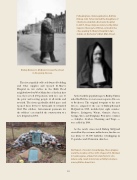
Bishop Bernard J. McQuaid crosses the street in his young diocese.
The sisters quickly collected donated bedding and other supplies and opened St. Mary’s Hospital in two stables in the Bulls Head neighborhood on West Main Street. In their  rst year, they served 250 patients, with free care to the poor and serving people of all faiths and no faith. The sisters gradually added space and opened their doors to thousands of wounded Civil War soldiers. Government payments for the soldiers’ care funded the construction of a new hospital in 1863.
Following two cholera epidemics, Buffalo Bishop John Timon invited the Daughters of Charity to establish a Rochester hospital.
In 1857, three religious sisters, led by Sister Superior Hieronymo O’Brien, arrived in the city, opening St. Mary’s Hospital in two stables on Rochester’s West Main Street.
As the Catholic population grew, Bishop Timon asked the Holy See to create a new, separate, Diocese of Rochester. The original footprint of the new diocese, assigned to the care of Bishop Bernard McQuaid in 1868, included just eight counties: Monroe, Livingston, Wayne, Ontario, Seneca, Cayuga, Yates, and Tompkins. Four more counties — Schuyler, Steuben, Chemung and Tioga — were added in 1896.
As the newly consecrated Bishop McQuaid started his 41-year tenure in Rochester, his diocese was home to 54,500 Catholics worshipping in 35 parishes and 28 mission churches.
Northwest of modern Canandaigua, these plaques mark the location of the 1656 Chapel of St. Michael in Gandougarae, a New York state historic site where early Jesuit missionary activity took place among Native Americans.
10


