


Page 14 - ROCHESTER
P. 14
A DETERMINED LEADER FOR THE NEW DIOCESE
As reported by the late Father Robert F. McNamara in his 1998 history, The Diocese of Rochester in America, Bernard McQuaid was well suited
to the challenge of building
the church in Rochester and serving the largely poor Catholic population in his pastoral care.
As a young priest, Father McQuaid served as a top adviser to Bishop James Bayley of Newark, and as secretary to the rector of the cathedral there. He co-founded Seton Hall College with Bishop Bayley, and for 10 years he served as its president while attending to his pastoral duties. He carried with him to Rochester BishopBayley’s goal of a Catholic
elementary school for every parish.
The young priest considered voluntary poverty to be a symbol of the detachment and charity that should be re ected in
Bishop McQuaid was New York
City-born, the son of Irish immigrants.
His mother died when he was a boy. His father remarried but was killed in an assault by a co-worker. His stepmother
had little interest in the boy who was taken
by family friends to live at the Roman Catholic Orphan Asylum run by the Sisters of Charity. There he grew close to St. Elizabeth Ann Seton, Father McNamara wrote, and he “never forgot her lessons in self-reliance, dogged perseverance, and happy poverty.”
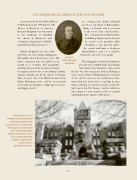
Situated on 20 acres between Lake Avenue and the western bank of the Genesee River, St. Bernard’s Seminary was constructed from distinctly reddish Medina Sandstone mined from nearby Hanford’s Landing. It opened for its  rst class in September of 1893.
A young Father Bernard J. McQuaid.
12
the life of a diocesan priest, Father McNamara wrote. In fact, Father McQuaid made a vow that at the end of each year, he would never have more than $25 of his own — a pledge he kept until, as bishop, he opened a bank account. He had a great head for  nance, and he would use his acumen to raise funds needed to expand and maintain the church of Rochester.


