


Page 15 - ROCHESTER
P. 15
The Founding of the Diocese of
Rochester
13
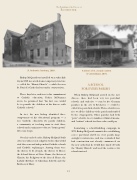
St. Andrew’s Seminary, 1889.
Bishop McQuaid was installed on a sultry July day in 1868 in a wood-frame temporary structure — called the “Shanty Church” — while the new St. Patrick’s Cathedral was under construction.
Three days later, and true to his commitment to Catholic education, Father McNamara wrote, he promised that “his  rst care would be to provide the children of his diocese with Catholic schools.”
In fact, the new bishop identi ed three components of his educational program — a free Catholic education for parish children, a community of teaching nuns to staff those schools and a seminary to educate “home grown” diocesan clergy.
Over his early decades, Bishop McQuaid built close ties with several religious orders that would staff diocesan and independent Catholic schools and Catholic orphanages. Among them were the Sisters of St. Joseph, the Sisters of Mercy, the School Sisters of Notre Dame, the Sisters of Charity, the Religious of the Sacred Heart, the LaSalle Brothers of Christian Schools and the Brothers of Mary.
A Sisters of St. Joseph convent in Canandaigua, 1854.
A SCHOOL FOR EVERY PARISH
When Bishop McQuaid arrived in the new diocese, there had been very few parochial schools, and only  ve — run by  ve German parishes in the city of Rochester — could be called true parochial schools. Those schools were free to all the children of the parish and funded by the congregation. Other parishes had both “poor” schools, free to families of limited means, and “tuition” schools for those who could pay.
Launching a school-building campaign in 1871, Bishop McQuaid committed to establishing a free parochial school in every parish large enough to sustain one, and once remarked that had construction not already commenced on the new cathedral, he would have made do with the “Shanty Church” and used the resources for schools instead.


