


Page 16 - ROCHESTER
P. 16
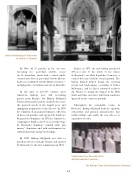
Interior furnishings of the former St. Patrick’s Cathedral.
By 1896, all 15 parishes in the city were operating free parochial schools, except for St. Stanislaus, which had a school under construction. Fifteen parochial schools likewise had been established outside Monroe County — including three in Auburn and two in Dansville.
In the mid- to late-19th century, most American bishops were still recruiting priests from Europe, but Bishop McQuaid believed that native priests would better serve the pastoral needs of the largely poor and immigrant population of his diocese. In 1870 he commenced an annual seminary collection in diocesan parishes and opened St. Andrews’ Preparatory Seminary. In 1872 he launched a campaign to build a school of sacred theology, St. Bernard’s Seminary, funded with “pin money” donations and with endowments for student materials and professorships.
By 1887, Bishop McQuaid was able to purchase 20 acres on Lake Avenue and opened St. Bernard’s to the  rst seminarians in 1893.
Earlier, in 1871, the  rst bishop purchased 109acres just to the north of the future St. Bernard’s, for Holy Sepulchre Cemetery, a central diocesan Catholic burial ground. The bishop himself helped design the watering system and landscaping, according to Father McNamara, and he hired renowned architect A.J. Warner to design the Chapel of the Holy Souls and other structures built from sandstone quarried on the cemetery grounds.
Throughout his remarkable tenure in Rochester, Bishop McQuaid built the spiritual, educational and physical infrastructure that would stabilize and enable the new diocese to expand for decades.
14
Tombstones from the early 1900s at Holy Sepulchre Cemetery.
The Bishops’ Crypt at Holy Sepulchre Cemetery.


