


Page 10 - CA System 44 Dyslexia Alignment
P. 10
E ective Approaches for Teaching Students with Dyslexia
Content of Structured Literacy Instruction: What is Taught
Orthography
Orthography is the conventional spelling system of a language—the graphemes that represent the phonemes in English words. Orthographic processing, or coding, is the ability to use orthographic knowledge (letters–symbols) to read and spell words. Orthographic awareness, the sensitivity to the constraints on how letters in written words are organized, contributes to learning letter–sound associations (Black 2016).
Students must learn to associate the sounds (phonemes) with the letters (graphemes) that represent them, and then form the letter or letters (grapheme) that spell that phoneme. When encoding (spelling) words, segmentation of each syllable into its individual phonemes—in correct sequence—is a prerequisite. This is a two- way street, wherein students also must be able to identify a letter or letters (grapheme), associate the grapheme with the sound (phoneme)
it represents, and then blend the individual phonemes into a syllable or word. When decoding (reading) a word, phoneme blending is a prerequisite.
For spelling English words, there are additional
considerations. When choosing the spelling
for a phoneme with multiple spellings, English
spelling conventions and meanings of words
both play an important role (e.g., play versus
plate; grown versus groan). In addition, su x
S.M.A.R.T. Lesson
adding conventions, morphology, and etymology have signi cant in uence on the spelling of English words.
System 44 Personalized Instructional Software and Teacher-Facilitated Instruction
Orthography and decoding are taught as reciprocal skills in System 44. Each topic
in the System 44 software includes a Spelling Zone that provides explicit instruction in spelling patterns that were used in decoding as well as word strategies lessons in the same series. The Spelling Zone begins by providing audio and visual examples that reinforce understanding of the targeted sound-spelling. It uses assessment to create a customized list of spelling study words for each student, and it provides systematic practice with immediate, corrective feedback speci c to students’ errors. System 44 software and teacher-led lessons provide direct, explicit instruction on meaningful parts and syllable patterns, which helps students in spelling words.
In the dictation activity in The Code strand, students hear a sentence read aloud and are directed to type words of that sentence which contain specific elements (such as phoneme-grapheme associations, prefixes, suffixes, and inflectional endings). The dictation activity promotes listening comprehension and improved spelling, and helps students practice punctuation and sentence formation. The student receives immediate, corrective feedback on spelling, capitalization, and punctuation.
The Resources for Differentiated Instruction (RDI) book lessons reinforce the explicit, systematic instruction embedded within the software. These differentiated lessons begin with instruction that focuses students’ attention on the specific spelling pattern they will encounter in that day’s lesson and in the software. In every Code lesson there is a dictation activity, providing students with ample opportunities to transfer the spelling patterns they have learned into writing. To minimize overload on students’ attention and working memory, new words and spelling patterns
are introduced in small, manageable amounts and connected to prior learning. In addition, teachers can use the Sound and Articulation videos to model correct academic pronunciation of all sound-spellings as taught in the program.
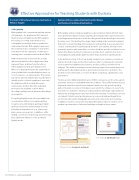
Sort It
Model how to complete the activity. Let’s sort the first word in the list together. Repeat after me: pal. Listen for
the sounds as I say the word slowly: /p/ /a/ /l/. Count the sounds on your fingers as you segment the word. Pal has three sounds, so write the word in the box on the right. Echo read the rest of the words and have partners complete the activity together.
• Communicate and Collaborate Display the student page or write Words With Two Sounds and Words With Three Sounds on the board. Have students write each word under the correct heading.
Segment and Spell
Model how to complete the activity. First, I will break the word into its sounds and write the letters of the word on the short blanks. Then I will complete the sentence by writing the word on the line. Ask students to follow along in their books.
• Read the word at. When I spell a word, I say each sound so I know which letters to use. Break the word into its sounds: /a/ /t/. I segment the word. The first sound is /a/, so I will write a. The second sound is /t/, so I will write t. Blend the word aloud. Have students complete the sentence by writing the word at in the blank.
Slowly segment and blend the remaining words: pet, bit, hop, van. Have students record and share their answers.
To reteach or review this S.M.A.R.T. lesson, see Resources for Differentiated Instruction, pp. 122–123.
CHECKPOINT
3U
Using Data to Differentiate (2 DAYS)
Use the Groupinator on the Teacher Dashboard to form differentiated instruction groups based on software performance. During Small-Group Instruction, reteach a phonics skill with half of the students while the other half reads independently. On the next day, switch students.
School Matters 27
Sort It
Write the words with two sounds and the words with three sounds in the correct box.
pal with pin it cap chat an tan us in
Segment and Spell
Write the letters of the words you hear read aloud. Then write the word in the sentence.
Words With Two Sounds
it an us in
Words With Three Sounds
pal with pin cap chat tan
1.a t 2.p e 3.b i 4.h o 5.v a
I am at
school.
May I pet
A bug bit
I can hop
We rode in a van
t t p n
your dog? me.
like a frog.
to the game.
10 | hmhco.com/system44
026-027_S44NG_PS_M1_SL2.indd 27 11/16/12 3:07 PM
026-027_S44NG_TS_M1_SL2.indd
27
1/24/13
2:58 PM
SCHOOL MATTERS 27
Phonics Focus Segment and Spell
PHONICS FOCUS
READ TALK WRITE
The Code ar Spelling Focus


