


Page 40 - teachers.PDF
P. 40
How are standard scores distributed?
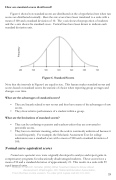
Figure 6 shows how standard scores are distributed on the a hypothetical test when raw scores are distributed normally. Here the raw scores have been translated to a scale with a mean of 100 and a standard deviation of 10. The y axis shows the proportion of students and the x axis shows the standard score. Vertical lines have been drawn to indicate each standard deviation unit.
480 520 560 600 640 680 720
Figure 6. Standard Scores
Note that the intervals in Figure 6 are equal in size. This feature makes standard scores and scores based on standard scores the statistic of choice when reporting group averages and changes over time.
What are the advantages of standard scores?
• They are linearly related to raw scores and thus have many of the advantages of raw scores.
• They show relative performance of a student within a group.
What are the limitations of standard scores?
• They can be confusing to parents and teachers unless they are converted to percentile scores.
• They have no intrinsic meaning, unless the scale is commonly understood because it is used frequently. For example, the Scholastic Assessment Test for college admissions uses a standard score with a mean of 500 and a standard deviation of 100.
Normal curve equivalent scores
Rudner, L. and W. Schafer (2002) What Teachers Need to Know About Assessment. Washington, DC: National Education Association.
From the free on-line version. To order print copies call 800 229-4200
Normal curve equivalent scores were originally developed to analyze and report gains in compensatory programs for educationally disadvantaged students. These scores have a mean of 50 and a standard deviation of approximately 21. This results in a scale with 99 equal interval units.
35
Frequency


