


Page 41 - teachers.PDF
P. 41
A normal curve equivalent score of 50 represents the national average of any grade level at the time of year the test was normed. A score of 30 is always the same distance below grade level, regardless of the level tested, and is twice as far below grade level as a score of 40.
Normal curve equivalent scores are similar in their range to percentile scores, but they have statistical properties that allow them to be used to compute summary statistics and gain scores.
How are normal curve equivalent scores distributed?
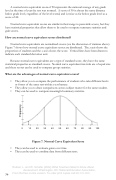
Normal curve equivalents are normalized scores (see the discussion of stanines above). Figure 7 shows how normal curve equivalent scores are distributed. The y-axis shows the proportion of students and the x-axis shows the score. Vertical lines have been drawn to indicate each standard deviation unit.
Because normal curve equivalents are a type of standard score, they have the same statistical properties as standard scores. Normal curve equivalent intervals are of equal size and these scores can be used to compute group statistics.
What are the advantages of normal curve equivalent scores?
• They allow you to compare the performance of students who take different levels or forms of the same test within a test battery.
• They allow you to draw comparisons across subject matter for the same student.
• They can be used to compute meaningful summary statistics.
0 10 20 30 40 50 60 70 80 90 100
36
Figure 7. Normal Curve Equivalent Score
• They can be used to evaluate gains over time.
• They can be used to combine data from different tests.
Rudner, L. and W. Schafer (2002) What Teachers Need to Know About Assessment. Washington, DC: National Education Association.
From the free on-line version. To order print copies call 800 229-4200
Frequency


