


Page 39 - teachers.PDF
P. 39
3 3.5 4 4.5 5 5.5 6
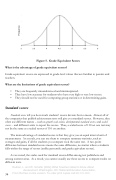
Figure 5. Grade Equivalent Scores What is the advantage of grade equivalent scores?
Grade equivalent scores are expressed in grade-level values that are familiar to parents and teachers.
What are the limitations of grade equivalent scores?
• They are frequently misunderstood and misinterpreted.
• They have low accuracy for students who have very high or very low scores.
• They should not be used for computing group statistics or in determining gains.
Standard scores
Standard scores tell you how much students' scores deviate from a mean. Almost all of the companies that publish achievement tests will give you standard scores. However, they often use different names -- such as growth scale values, developmental standard scores, and scaled scores -- and different units to report the scores. Thus, a scaled score of 110 on one test may not be the same as a scaled scores of 110 on another.
The main advantage of standard scores is that they give you an equal interval unit of measurement. As a result, you can use them to compute summary statistics, such as averages and gains, if all the students you compare took the same test. A two-point difference between standard scores means the same difference, no matter where a students falls within the range of scores (unlike percentile and grade equivalent scores).
As we noted, the scales used for standard scores differ among test publishers and among content areas. As a result, you cannot usually use these scores to compare results on different tests.
Rudner, L. and W. Schafer (2002) What Teachers Need to Know About Assessment. Washington, DC: National Education Association.
From the free on-line version. To order print copies call 800 229-4200
34
Frequency


