


Page 34 - 2026 Nonprofit Industry Trends
P. 34
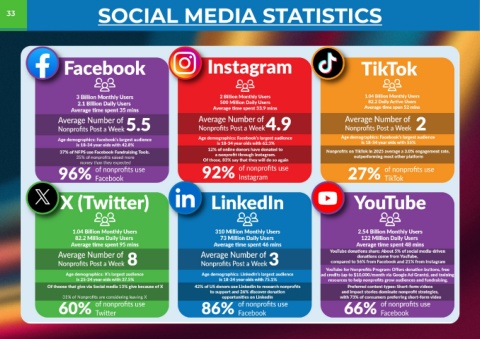
33 SOCIAL MEDIA STATISTICS 34
BIANCA
BELLO THEODORE MASSILLON
STRATEGY DIRECTOR FOUNDER & CEO
HELPGOOD NOM MEDIA
Unpredictable grant funding cuts and the loss of funding for From a video storytelling perspective, the biggest challenge facing nonprofits in 2026 is the widening visibility
public benefit programs like SNAP will place more pressure gap between organizations that can produce professional-quality video content and those that cannot.
on nonprofits to support a larger population with fewer
resources. Nonprofits of any size that rely on federal funding We are in an era where donors do not just want to read about impact—they want to see and feel it. Video content generates
should consider ramping up individual giving and corporate 1,200% more shares than text and images combined, and platforms like TikTok, Instagram Reels, YouTube Shorts, and
sponsorships as a safety net. Social media is an excellent tool connected TV have fundamentally changed how supporters discover and connect with causes. Yet the organizations
to find new donors and grow your individual giving program doing the most critical community work often lack the resources, expertise, or time to create compelling video content.
at any budget level. Influencer marketing can quickly grow
awareness with new donor audiences, and with a small paid For smaller nonprofits (under $1 million budgets), this challenge is acute. These organizations often operate with skeleton
media investment in a lead generation campaign, you can crews wearing multiple hats. They understand the need for video but face an “expertise gap”—staff who are excellent program
remarket these audiences and funnel them to your email list managers but have never held a camera or edited footage. Many resort to inconsistent, DIY content that fails to convey the true
to keep them engaged long term and convert them into repeat power of their work. The irony is stark: the most impactful grassroots organizations often have the weakest digital presence.
donors. Many nonprofits feel intimidated by social media, but
the results can be transformative even with a small budget. Mid-sized nonprofits ($1–$10 million) face a different challenge: the consistency trap. These organizations may
produce a strong annual appeal video but lack systems for ongoing storytelling. In 2026, sporadic video content
With the influx of AI-generated content, social media feeds is no longer sufficient. Donors expect regular engagement, and algorithms reward consistent posting. Video can
are filled with misinformation that looks very real. To ensure no longer be treated as an occasional project; it must function as an ongoing communications infrastructure.
your community is getting the truth on issues that matter,
nonprofits should be active on social media with content that For larger nonprofits ($10 million and above), the challenge is differentiation and authenticity. While these
addresses misinformation on a regular basis. With a small paid organizations can afford professional production, their content often feels overly polished and corporate. In 2026,
media investment, you can also target your audience with a donors—particularly younger generations—will reward authenticity over production value. The organizations that
campaign that encourages them to move from social media to thrive will balance professional quality with genuine human stories, rather than relying on scale or budget alone.
your newsletter, where deeper education can happen.
Across all nonprofit sizes, a universal challenge remains: competing for attention in an increasingly crowded
To weather any funding cut or policy change, nonprofits need digital landscape while respecting the dignity of the people served. Ethical storytelling—showing impact
a strong community that fights for them. In 2026, nonprofits without exploitation—will be the defining skill that separates effective nonprofit communicators from the rest.
should think about what happens after their fundraising
campaign is over and how to give donors a more active role In response, nonprofits must rethink how they approach video. The most effective organizations will build systems, not one-off campaigns.
in the organization. Social media is an excellent way to turn This includes creating “story banks” through ongoing content capture, leveraging short-form video for donor acquisition and long-
donors into advocates. You can gather feedback from your form video for stewardship, and investing in evergreen video assets that can be reused across appeals, reporting, and education.
community to learn what volunteer opportunities they are
interested in, what skills they bring, and their capacity to These shifts reflect a broader operational reality. Video in 2026 is no longer a marketing add-on; it
support your organization. With a simple social toolkit, donors is core infrastructure. Organizations that build internal capacity—through training, partnerships, or
can create their own content to amplify your work, start peer-
to-peer fundraisers, host house parties and teach-ins, and help ongoing production support—will be better positioned to sustain visibility and donor engagement.
The nonprofits that thrive in 2026 will not necessarily be those with the largest budgets or flashiest productions. They will be the
fight misinformation. organizations that consistently capture authentic stories, build sustainable systems for content creation, and connect donors
emotionally to the human impact behind their mission.

