


Page 246 - 72193
P. 246
218
 החיתפ
                                              st
 םייח ץפח
 Chafetz Chayim  םימש דובכ סרטנוק  .וּנ ּ ָב ד ּ קֵרְַמ אוּה ןִידֲַעַו ,םּ ָנִח תַאְנִשְׂו ערָָה ןוֹשָׁל   )* םידִיִחְי ןי ּ ֵב םָתוֹא ץיִפָהְלוּ ,םָנוֹשְׁל ּ ִב םיִלקְְלקְַמַה שֶׁנֹע   לדֶֹּג ךְֶפֶהְלוּ ,וֹנוֹשְׁלוּ וי ּ ִפ רֵמוֹשַּׁה רַכְשׂ לדֶֹג ּ ְב םיִגיִלְפ ּ ַמַה   ,ל"ַזֲח  ירְֵמַאַמ  הֶזיֵא  תַחַא  הָלְבַט  לַע  רוּצּקִ ּ
  Kuntres Kevod Shamayim          םימש דובכ סרטנוק
 1  chapter                              א קרפ
 st
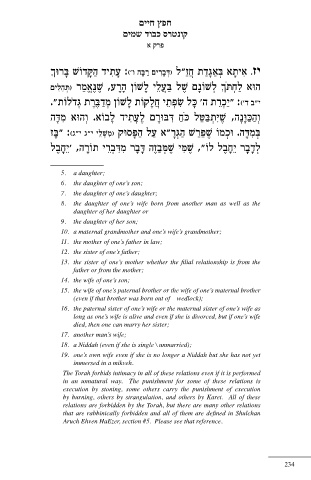
               ךְוּר ָּב שׁוֹד ּקַָה דיִתָע :)'ו ה ָּברַ םירִָב ּדְ( ל"ַזֲח תדַָּגַא ְּב אָתיִא .זי


               םי ִּלִה ְּת( רַמֱאֶּנֶשׁ ,ערָָה ןוֹשָׁל יֵלֲע ַּב לֶשׁ םָנוֹשְׁל ךְ ֹּתְחַל אוּה
               ."תוֹלדְֹּג תרֶ ֶּבדְַמ ןוֹשָׁל תוֹקָלֲח יֵתְפִשׂ ל ָּכ 'ה תרְֵכַי" :)'ד ב"י
 Chafetz Chayim              Kevod Shamayim
               ה ָּדִמ אוּהְו .אוֹבָל דיִתָעֶל םרָוּבּ ּדִ ַח ֹּכ ל ֵּט ַּבְתִּיֶשׁ ,הָנָּו ַּכַהְו
 1  chapter    ז ָּב" :)ג"י ג"י יֵלְשִׁמ( קוּס ָּפַה לַע א"רְָּגַה שׁרַ ֵּפֶשׁ וֹמְכוּ .ה ָּדִמ ְּב
 st
 “Praiseworthy  is  the  person  who  fears  Hashem    לֶבָחֵי' ,הרָוֹת ירְֵב ּדִִמ רָב ָּד הֶּזַב ְּמֶשׁ י ִּמֶשׁ ,"וֹל לֶבָחֵי רָבָדְל
 and greatly desires His mitzvot” (Tehilim 112:1).
 In this chapter I will list twenty statements that   5.   a daughter;
 deal with the enormity of the reward for those who   6.   the daughter of one’s son;
 discipline  themselves  and  guard  the  words  that   7.   the daughter of one’s daughter;
 come out of their mouths.  8.   the  daughter  of  one’s  wife  born  from  another  man  as  well  as  the
                     daughter of her daughter or
                 9.   the daughter of her son;
 [ 1 ]  One who guards \ disciplines his mouth is rewarded with   10.  a maternal grandmother and one’s wife’s grandmother;
 the title “Eesh” \ “Man,” as David HaMelech writes in Tehilim   11.   the mother of one’s father in law;
 (34:13) “Who is the “Eesh” \ “Man” who wants life.”  12.  the sister of one’s father;
                 13.  the sister of one’s mother whether the filial relationship is from the
 [ 2 ]  One who disciplines his mouth earns the blessings of this   father or from the mother;
 world, as the Midrash Tanchumah (Mechilta) relates in perashat   14.  the wife of one’s son;
 Mishpatim (Shemot 22:30) “the meat of a torn animal found in   15.  the wife of one’s paternal brother or the wife of one’s maternal brother
 the field may not be eaten, throw it to the dogs,” to teach us that   (even if that brother was born out of    wedlock);
 HaKadosh  Baruch  Hu  does  not  withhold  reward  from  any  of   16.  the paternal sister of one’s wife or the maternal sister of one’s wife as
 His creations.  (Even the dogs of Egypt were rewarded for not   long as one’s wife is alive and even if she is divorced, but if one’s wife
 barking during the Exodus) As the pasuk relates (Shemot 11:7)   died, then one can marry her sister;
 “But not one dog opened its mouth (to bark) against all of the   17.  another man’s wife;
 people of Israel.”  This (Midrash) is derived from a simple logical   18.  a Niddah (even if she is single \ unmarried);
 deduction.  If this was the reward given to an (instinct driven)   19.  one’s own wife even if she is no longer a Niddah but she has not yet
 animal, isn’t it obvious that HaKadosh Baruch Hu will reward   immersed in a mikveh.
 man (for exercising his intellect and performing Gd’s Will).     The Torah forbids intimacy in all of these relations even if it is performed
                  in  an  unnatural  way.    The  punishment  for  some  of  these  relations  is
 [ 3]  One who disciplines his mouth will be saved from Gehinnom,   execution  by  stoning,  some  others  carry  the  punishment  of  execution
 as  the  Midrash  Tanchumah  relates  (perashat  Mehtzorah  #  2)   by burning, others by strangulation, and others by Karet.  All of these
 – “HaKadosh Baruch Hu said – If you want to be saved from   relations are forbidden by the Torah, but there are many other relations
                  that are rabbinically forbidden and all of them are defined in Shulchan
 Gehinnom, then keep yourselves away from Lashon Hara and   Aruch Ehven HaEzer, section #5.  Please see that reference.


 223                                                                          234

