


Page 4 - Demo-1
P. 4
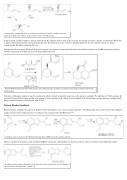
Enzyme-metal coupled hydrolysis of acetates in stereoselective fashion. Candida antarctica lipase B (CALB) is the catalytic enzyme used to select for the (R) acetate.
In this reaction, a Pd(0) complex is used to interconvert the chirality of the acetate center at a rate fast enough to ensure complete racemization. When this is achieved the CALB enzyme selectively hydrolyzes the (R) substrate because of the low binding affinity for the (S) substrate. This gives almost exclusively the (R) allylic alcohol in 98% ee.
To expand on this chemistry, Bäckvall designed a one-pot, two-reaction system that utilizes the stereochemical outcome of a DKR reaction to undergo a second energetically favorable reaction with high enantioselectivity.
This time a ruthenium complex is used to racemize the allylic alcohol in much the same way as the previous example. The addition of CALB catalyzes the reaction between the (R) isomer and the ester reagent to form a product with a diene and a dienophile. This intermediate can then undergo a tandem Diels- Alder reaction to achieve a decent yield with 97% ee.
Natural Product Synthesis
Dynamic kinetic resolution has also been applied to the total synthesis of a variety of natural products. After Bäckvall’s discoveries in 2007, she employed another enzyme-metal coupled reaction to synthesize the natural product (R)-Bufuralol.[18]
Tandem DKR-intramolecular Diels-Alder reaction. The ruthenium dimer facilitates racemization at the allylic position much like the Pd(0) catalyst.
Condensed reaction scheme for (R)-Bufuralol showing the key DKR step in the synthetic pathway.
Acetylation reaction using a Ru catalyst to racemize the alcohol, followed by selective binding of the (S) isomer to the lipase PS-C “Amano” II.
The key step that the literature points out utilizes DKR to convert the chlorohydrin into the (S)-acetate by means of a lipase and a ruthenium catalyst.


