


Page 3 - Demo-1
P. 3
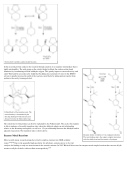
Stereoselective proline-catalyzed aldol reaction.
Felkin Model of the transition state. The stereochemistry is determined by the directing hydrogen bond and increased distance between the bulky sulfur rings.
Dynamic kinetic resolution of 1,4 conjugate reduction. The rate-limiting step is the copper complex interaction with the double bond and the transfer of hydrogen.
In this reaction proline catalyzes the reaction through creation of an enamine intermediate that is highly nucleophilic. The acid group on the catalyst helps facilitate the carbon-carbon bond formation by coordinating with the aldehyde oxygen. This greatly improves stereoselectivity and yield. Ward and his associates also found that by adding trace amounts of water to the DMSO solvent, it greatly increase the yield of the reaction, most likely by aiding proton transfer from proline to the newly forming alcohol.
The selectivity for this product can best be explained by the Felkin model. The cyclic (E)-enamine is able to undergo a favorable transition state where the aldehyde adopts an anti relationship relative to the incoming nucleophile, as well as a 1,2 syn relationship between the aldehyde and its adjacent ring system. The transition state is shown above.
Enzyme-Metal Reactions
More recently many research groups have tried to employ enzymes into DKR synthetic
routes.[15][16] Due to the generally high specificity for substrates, enzymes prove to be vital
catalysts for binding to only one stereoisomer in the racemic mixture. In 2007 Bäckvall discovered an enzyme-metal coupled reaction that converts allylic
acetates to allylic alcohols with excellent stereospecificity.[17]


