


Page 149 - PCMI December 2017 Journal
P. 149
 Issue 130 December 2017 PCMI Journal Page 148
Regenera on of FeCl3 by Using Chlorine
Hans Schmitz | CEO | KSD Innova ons GmbH | DE
11/26/17
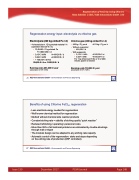
    Benefits of using Chlorine FeCl2/3 regeneration
•  Less electrical energy needed for regeneration
•  Well known chemical method for regeneration
•  Method without chemical side reaction products
•  Constant etching rate = stability of etching quality “quick reaction”
•  Reduced refinishing / operating / personnel costs
•  More than 95% of all technical problems are eliminated by trouble-shootings through mail or skype
•  The modular design can be adapted to any etching rate capacity
•  Automatic control of the regeneration: starts and stops depending on the etching rate of production (ORP controlled)
   27 KSD Innovations GmbH – Environmental- and Process Engineering
 Regeneration energy input: electrolysis vs chlorine gas
Electrolysis (240 kg etched Fe / d)
•  4 electrolysis w. 12 kg etched material / h (operation time 20 h / d)
•  15,8 kWh / 1 kg etched Fe  3.800 kWh / d
Chlorine gas (240 kg etched Fe / d)
•  0,13 € / kWh
•  0,26 € / kWh
•  + 100,00 € / d HCl
594,00 € / d or 1.088,00 € / d
Running costs 203.400 € / year
(assumption 0,13 € / kWh)
•  460 kg / Cl2 per d •  Without evaporator
•  492,00 € / d
•  With evaporator •  0,13 € / kWh
 23 kg / Cl2 per h  500,00 € / d
 494,00 € / d  988,00 € / d
•  0,26 € / kWh
For 1 kg Chlorine 270 KJ or 0,12 kWh
 506,00 € / d electric power is needed
Running costs 139.200 € / year
(assumption 0,13 € / kWh)
  26 KSD Innovations GmbH – Environmental- and Process Engineering
 13


