


Page 19 - EMS CPR Manual V1
P. 19
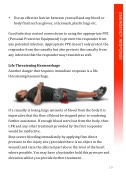
• Use an effective barrier between yourself and any blood or body fluid such as gloves, a facemask, plastic bags etc.
Good infection control comes down to using the appropriate PPE (Personal Protective Equipment) to protect the responder from any potential infection. Appropriate PPE doesn’t only protect the responder from the casualty but also protects the casualty from any infection that the responder may transmit as well.
Life Threatening Haemorrhage
Another danger that requires immediate response is a life threatening haemorrhage.
If a casualty is losing large amounts of blood from the body it is imperative that the flow of blood be stopped prior to rendering further assistance. If enough blood were lost from the body, then CPR and any other treatment provided by the first responder would be ineffective.
Stop severe bleeding immediately by applying firm direct pressure to the injury site (provided there is no object in the wound) and raise the affected part above the level of the heart where possible. You may have a bystander hold this pressure and elevation whilst you provide further treatment.
19
EMERGENCY RESPONSE


