


Page 29 - Demo samer flip book
P. 29
Investopedia.com – the resource for investing and personal finance education.
Kohl's Corporation uses LIFO, but its LIFO reserve declined year over year--from $4.98 million to zero. This is known as LIFO liquidation or liquidation of LIFO layers, and indicates that, during the fiscal year, Kohl's sold or liquidated inventory that was held at the beginning of the year. When prices are rising, we know that inventory held at the beginning of the year carries a lower cost (because it was purchased in prior years). Cost of goods sold is therefore reduced, sometimes significantly. Generally, in the case of a sharply declining LIFO reserve, we can assume that reported profit margins are upwardly biased to the point of distortion.
Cash Conversion Cycle
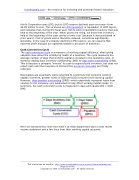
The cash conversion cycle is a measure of working capital efficiency, often giving valuable clues about the underlying health of a business. The cycle measures the average number of days that working capital is invested in the operating cycle. It starts by adding days inventory outstanding (DIO) to days sales outstanding (DSO). This is because a company "invests" its cash to acquire/build inventory, but does not collect cash until the inventory is sold and the accounts receivable are finally collected.
Receivables are essentially loans extended to customers that consume working capital; therefore, greater levels of DIO and DSO consume more working capital. However, days payable outstanding (DPO)--which essentially represent loans from vendors to the company--are subtracted to help offset working capital needs. In summary, the cash conversion cycle is measured in days and equals DIO + DSO – DPO:
Here we extracted two lines from Kohl's (a retail department store) most recent income statement and a few lines from their working capital accounts.
This tutorial can be found at: http://www.investopedia.com/university/financialstatements/ (Page 29 of 66)
Copyright © 2004, Investopedia.com - All rights reserved.


