


Page 12 - Priorities 6
P. 12
Then in twelfth grade I drop in as a guest speaker and tie music to studies in the Humanities.
e So everyone has hands-on experience, but the goal is different from the choir or orchestra. In the classroom, the students are becoming musically literate, so that they understand the terms, the construction, the varieties of musical styles...
Sims: Iamhopingthatbeforelongwecanadd electronic music – a basic midi-board setup would allow me to expand my teaching and especially to provide more individual instruction in, say, composition.
e Is the experience of teen-age pop music equally valuable?
Davison: The difference is in the level of complexity and sophistication. The popular forms serve different purposes. I always try to be open to various points of view...I think if kids get together to perform and they work at their musical form and they get good results, there is value to that. I find that the contribution I personally have to make is more in the area of “art music” in that I find it easier to relate that to the curriculum.
Salsbury: Our students know the kind of music they will be playing (or singing) here at the Priory and they seem to want it. They can do other music, too, outside of school, but they usually find that they still need the basic musical training offered in the curriculum.
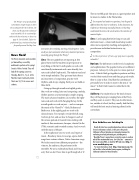
The Priory’s very special pianist extrordinaire, Taylor Eigsti, is often the accompanist for the orchestra, the choir, and the Queentet (advanced vocal ensemble). He is occasionally a soloist with the orchestra, or alone (see page 4). Out of school, Taylor is a professional jazz musician who plays frequently around the Bay Area.
instruction for everybody, starting at kindergarten. Carla, could you just summarize what every student experiences musically going through the Priory?
Sims: The new guidelines are imposing at first glance but in fact the students do get exposure to everything on the list. In sixth grade we work with user-friendly instruments and a user-friendly, five- note scale (called Orph music). The students read and write simple melodies. They get some basic theory and awareness of composition, practice with rhythms, and always singing. Each year, we build on these skills.
Going up through seventh and eighth grades, they work on writing lyrics and composing a melody, rhythm practice, and increasingly complex singing. The more advanced students can switch to the eight- note scale and work with changing the key. In the seventh grade we work on jazz ... and we compare the music of the “three B’s” – Bach, Brahms and Beethoven. In the eighth grade we work with classical music. For example, we take the folk song, Scarborough Fair, and see how it changes in each of the various periods of musical form, starting with medieval, then renaissance, baroque, classical (in the 1750s), romantic and twentieth century. And we work with the music of Mozart.
In the sophomore year we work on all types of music – Broadway tunes, love songs, opera, death songs from various cultures, Native American songs. We look at music from different perspectives – the virtuoso, the audience, the performer in the ensemble. We use a multicultural book and I’m just sorry that we don’t have time to get through all of it!
News Flash!
The Priory’s Queentet vocal ensemble just learned they successfully auditioned to perform in this spring’s Sounds of Music Festival. They will lead off the opening concert on Thursday, March 12, 7 p.m. at the Palo Alto Jewish Community Center. Tickets are $8, $5 for seniors and students.
New Guidelines are Catching On
Nearly all states have recently adopted new advisory standards for music education in schools, or they are in the process. California’s office of education just released a document for evaluating visual and performing arts, including music.
Woodside Priory’s required music curriculum seems to conform with all the recommended areas. See Carla Sims’ comments in this Conversation With, or check the WPS web site at http:// www.woodsidepriory.com.
For more information, check http://amc-music.com. This site has links to the individual state programs, including the California Coalition for Music Education.
12


