


Page 81 - Community pharmcy practice E-book 2025
P. 81
02/11/2025, 00:10                             Otic & Ophthalmic Disorders | Dermatological Disorders

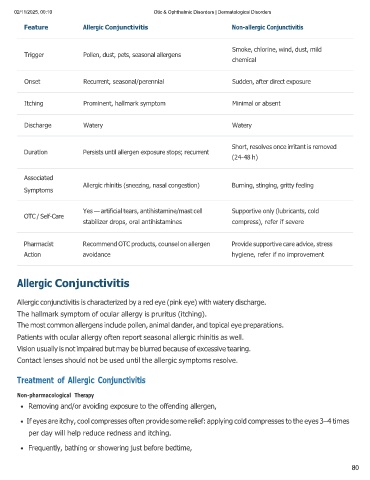
    Feature          Allergic Conjunctivitis                            Non-allergic Conjunctivitis

    Trigger          Pollen, dust, pets, seasonal allergens             Smoke, chlorine, wind, dust, mild
                                                                        chemical
    Onset
    Itching          Recurrent, seasonal/perennial                      Sudden, after direct exposure
    Discharge
                     Prominent, hallmark symptom                        Minimal or absent
    Duration
                     Watery                                             Watery
    Associated
    Symptoms         Persists until allergen exposure stops; recurrent  Short, resolves once irritant is removed
                                                                        (24-48 h)
    OTC / Self-Care
                     Allergic rhinitis (sneezing, nasal congestion)     Burning, stinging, gritty feeling
    Pharmacist
    Action           Yes — artificial tears, antihistamine/mast cell    Supportive only (lubricants, cold
                     stabilizer drops, oral antihistamines              compress), refer if severe

                     Recommend OTC products, counsel on allergen        Provide supportive care advice, stress
                     avoidance                                          hygiene, refer if no improvement

Allergic Conjunctivitis

Allergic conjunctivitis is characterized by a red eye (pink eye) with watery discharge.
The hallmark symptom of ocular allergy is pruritus (itching).
The most common allergens include pollen, animal dander, and topical eye preparations.
Patients with ocular allergy often report seasonal allergic rhinitis as well.
Vision usually is not impaired but may be blurred because of excessive tearing.
Contact lenses should not be used until the allergic symptoms resolve.

Treatment of Allergic Conjunctivitis

Non-pharmacological Therapy

    Removing and/or avoiding exposure to the offending allergen,
   If eyes are itchy, cool compresses often provide some relief: applying cold compresses to the eyes 3–4 times
    per day will help reduce redness and itching.
    Frequently, bathing or showering just before bedtime,

                                                                                                                                                       80

