


Page 243 - Handout Computer Network.
P. 243
Computer Network                                                             2026


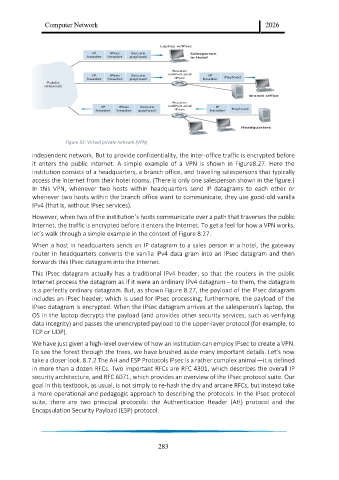
                        Figure 51: Virtual private network (VPN)
            independent network. But to provide confidentiality, the inter-office traffic is encrypted before
            it  enters  the  public  Internet.  A  simple  example  of  a  VPN  is  shown  in  Figure8.27.  Here  the
            institution consists of a headquarters, a branch office, and traveling salespersons that typically
            access the Internet from their hotel rooms. (There is only one salesperson shown in the figure.)
            In  this  VPN,  whenever  two  hosts  within  headquarters  send  IP  datagrams  to  each  other  or
            whenever two hosts within the branch office want to communicate, they use good-old vanilla
            IPv4 (that is, without IPsec services).

            However, when two of the institution’s hosts communicate over a path that traverses the public
            Internet, the traffic is encrypted before it enters the Internet. To get a feel for how a VPN works,
            let’s walk through a simple example in the context of Figure 8.27.
            When a host in headquarters sends an IP datagram to a sales person in a hotel, the gateway
            router in headquarters converts the vanilla IPv4 data gram into an IPsec datagram and then
            forwards this IPsec datagram into the Internet.
            This  IPsec  datagram  actually  has  a  traditional  IPv4  header, so  that  the  routers  in  the  public
            Internet process the datagram as if it were an ordinary IPv4 datagram—to them, the datagram
            is a perfectly ordinary datagram. But, as shown Figure 8.27, the payload of the IPsec datagram
            includes an IPsec header, which is used for IPsec processing; furthermore, the payload of the
            IPsec datagram is encrypted. When the IPsec datagram arrives at the salesperson’s laptop, the
            OS in the laptop decrypts the payload (and provides other security services, such as verifying
            data integrity) and passes the unencrypted payload to the upper-layer protocol (for example, to
            TCP or UDP).

            We have just given a high-level overview of how an institution can employ IPsec to create a VPN.
            To see the forest through the trees, we have brushed aside many important details. Let’s now
            take a closer look. 8.7.2 The AH and ESP Protocols IPsec is a rather complex animal—it is defined
            in more than a dozen RFCs. Two important RFCs are RFC 4301, which describes the overall IP
            security architecture, and RFC 6071, which provides an overview of the IPsec protocol suite. Our
            goal in this textbook, as usual, is not simply to re-hash the dry and arcane RFCs, but instead take
            a more operational and pedagogic approach to describing the protocols. In the IPsec protocol
            suite,  there  are  two  principal  protocols:  the  Authentication  Header  (AH)  protocol  and  the
            Encapsulation Security Payload (ESP) protocol.


                                                         283

