


Page 25 - M. Abrahim Thesis
P. 25
Computer Network                                                             2021


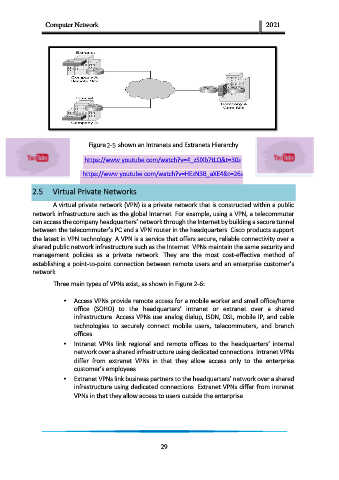
                                Figure 2-5 shown an Intranets and Extranets Hierarchy

                              https://www.youtube.com/watch?v=4_zSIXb7tLQ&t=30s


                              https://www.youtube.com/watch?v=HEzN3B_aXE4&t=26s


            2.5   Virtual Private Networks
                   A virtual private network (VPN) is a private network that is constructed within a public
            network infrastructure such as the global Internet. For example, using a VPN, a telecommuter
            can access the company headquarters’ network through the Internet by building a secure tunnel
            between the telecommuter’s PC and a VPN router in the headquarters. Cisco products support
            the latest in VPN technology. A VPN is a service that offers secure, reliable connectivity over a
            shared public network infrastructure such as the Internet. VPNs maintain the same security and
            management  policies  as  a  private  network.  They  are  the  most  cost-effective  method  of
            establishing a point-to-point connection between remote users and an enterprise customer’s
            network.

                    Three main types of VPNs exist, as shown in Figure 2-6:

                       •  Access VPNs provide remote access for a mobile worker and small office/home
                           office  (SOHO)  to  the  headquarters’  intranet  or  extranet  over  a  shared
                           infrastructure. Access VPNs use analog dialup, ISDN, DSL, mobile IP, and cable
                           technologies  to  securely  connect  mobile  users,  telecommuters,  and  branch
                           offices.
                       •  Intranet  VPNs  link  regional  and  remote  offices  to  the  headquarters’  internal
                           network over a shared infrastructure using dedicated connections. Intranet VPNs
                           differ  from  extranet  VPNs  in  that  they  allow  access  only  to  the  enterprise
                           customer’s employees.
                       •  Extranet VPNs link business partners to the headquarters’ network over a shared
                           infrastructure using dedicated connections. Extranet VPNs differ from intranet
                           VPNs in that they allow access to users outside the enterprise.


                                                         29

