


Page 34 - M. Abrahim Thesis
P. 34
Chapter (2) Network Fundamental and Layered Network Architecture


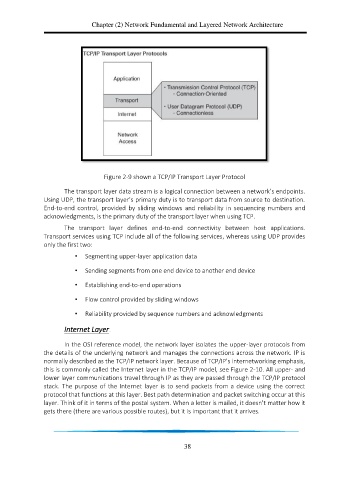
                                      Figure 2-9 shown a TCP/IP Transport Layer Protocol

                        The transport layer data stream is a logical connection between a network’s endpoints.
                Using UDP, the transport layer’s primary duty is to transport data from source to destination.
                End-to-end  control,  provided  by  sliding  windows  and  reliability  in  sequencing  numbers  and
                acknowledgments, is the primary duty of the transport layer when using TCP.
                        The  transport  layer  defines  end-to-end  connectivity  between  host  applications.
                Transport services using TCP include all of the following services, whereas using UDP provides
                only the first two:

                           •  Segmenting upper-layer application data

                           •  Sending segments from one end device to another end device

                           •  Establishing end-to-end operations

                           •  Flow control provided by sliding windows

                           •  Reliability provided by sequence numbers and acknowledgments


                        Internet Layer

                        In the OSI reference model, the network layer isolates the upper-layer protocols from
                the details of the underlying network and manages the connections across the network. IP is
                normally described as the TCP/IP network layer. Because of TCP/IP’s internetworking emphasis,
                this is commonly called the Internet layer in the TCP/IP model, see Figure 2-10. All upper- and
                lower layer communications travel through IP as they are passed through the TCP/IP protocol
                stack. The purpose of the Internet layer is to send packets from a device using the correct
                protocol that functions at this layer. Best path determination and packet switching occur at this
                layer. Think of it in terms of the postal system. When a letter is mailed, it doesn’t matter how it
                gets there (there are various possible routes), but it is important that it arrives.


                                                                  38

