


Page 37 - M. Abrahim Thesis
P. 37
Computer Network                                                             2021


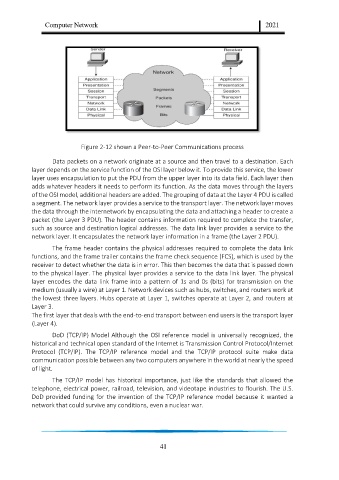
                             Figure 2-12 shown a Peer-to-Peer Communications process

                   Data packets on a network originate at a source and then travel to a destination. Each
            layer depends on the service function of the OSI layer below it. To provide this service, the lower
            layer uses encapsulation to put the PDU from the upper layer into its data field. Each layer then
            adds whatever headers it needs to perform its function. As the data moves through the layers
            of the OSI model, additional headers are added. The grouping of data at the Layer 4 PDU is called
            a segment. The network layer provides a service to the transport layer. The network layer moves
            the data through the internetwork by encapsulating the data and attaching a header to create a
            packet (the Layer 3 PDU). The header contains information required to complete the transfer,
            such as source and destination logical addresses. The data link layer provides a service to the
            network layer. It encapsulates the network layer information in a frame (the Layer 2 PDU).

                   The frame header contains the physical addresses required to complete the data link
            functions, and the frame trailer contains the frame check sequence (FCS), which is used by the
            receiver to detect whether the data is in error. This then becomes the data that is passed down
            to the physical layer. The physical layer provides a service to the data link layer. The physical
            layer encodes the data link frame into a pattern of 1s and 0s (bits) for transmission on the
            medium (usually a wire) at Layer 1. Network devices such as hubs, switches, and routers work at
            the lowest three layers. Hubs operate at Layer 1, switches operate at Layer 2, and routers at
            Layer 3.
            The first layer that deals with the end-to-end transport between end users is the transport layer
            (Layer 4).

                   DoD (TCP/IP) Model Although the OSI reference model is universally recognized, the
            historical and technical open standard of the Internet is Transmission Control Protocol/Internet
            Protocol  (TCP/IP).  The  TCP/IP  reference  model  and  the  TCP/IP  protocol  suite  make  data
            communication possible between any two computers anywhere in the world at nearly the speed
            of light.

                   The TCP/IP model has historical importance, just like the standards that allowed the
            telephone, electrical power, railroad, television, and videotape industries to flourish. The U.S.
            DoD provided funding for the invention of the TCP/IP reference model because it wanted a
            network that could survive any conditions, even a nuclear war.


                                                         41

