


Page 38 - M. Abrahim Thesis
P. 38
Chapter (2) Network Fundamental and Layered Network Architecture


                        To  illustrate  further,  imagine  a  world  at  war,  crisscrossed  by  different  kinds  of
                connections, including wires, microwaves, optical fibers, and satellite links. Then imagine that
                information/data (in the form of packets) must flow, regardless of the condition of any particular
                node or network on the internetwork (which, in this case, might have been destroyed by the
                war). The DoD wants its packets to get through every time, under any conditions, from any one
                point to any other point. This very difficult design problem brought about the creation of the
                TCP/IP model, which has since become the standard on which the Internet has grown.

                        When  reading  about  the  TCP/IP  model  layers,  remember  the  original  intent  of  the
                Internet; it helps explain why certain things are as they are. The TCP/IP model, as shown in Table
                2-1, has four layers:

                           •  The application layer
                           •  The transport layer

                           •  The Internet layer

                           •  The network access layer


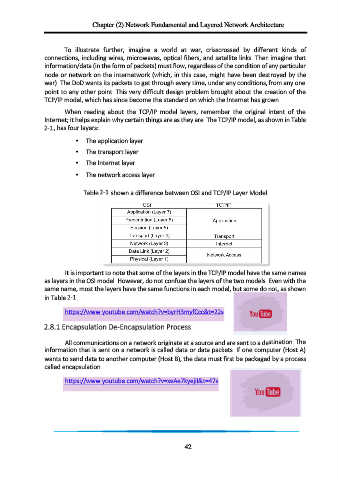
                              Table 2-1 shown a difference between OSI and TCP/IP Layer Model


                        It is important to note that some of the layers in the TCP/IP model have the same names
                as layers in the OSI model. However, do not confuse the layers of the two models. Even with the
                same name, most the layers have the same functions in each model, but some do not, as shown
                in Table 2-1.


                        https://www.youtube.com/watch?v=byrH3myfCcc&t=22s

                2.8.1 Encapsulation De-Encapsulation Process

                        All communications on a network originate at a source and are sent to a destination. The
                information that is sent on a network is called data or data packets. If one computer (Host A)
                wants to send data to another computer (Host B), the data must first be packaged by a process
                called encapsulation.

                        https://www.youtube.com/watch?v=xeAe7kyejiI&t=47s


                                                                  42

