


Page 6 - Market Outlook Q3 2025
P. 6
www.ntda.org
        6


        North American Trailer


        Economic Overview


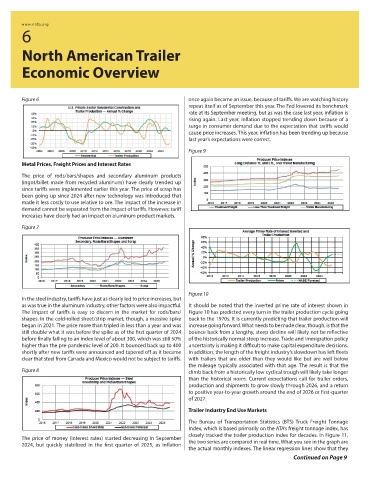
        Figure 6                                               once again became an issue, because of tariffs. We are watching history
                                                               repeat itself as of September this year. The Fed lowered its benchmark
                                                               rate at its September meeting, but as was the case last year, inflation is
                                                               rising again. Last year, inflation stopped trending down because of a
                                                               surge in consumer demand due to the expectation that tariffs would
                                                               cause price increases. This year, inflation has been trending up because
                                                               last year’s expectations were correct.
                                                               Figure 9

        Metal Prices, Freight Prices and Interest Rates

        The price of rods/bars/shapes and secondary aluminum products
        (ingot/billet made from recycled aluminum) have clearly trended up
        since tariffs were implemented earlier this year. The price of scrap has
        been going up since 2024 after new technology was introduced that
        made it less costly to use relative to ore. The impact of the increase in
        demand cannot be separated from the impact of tariffs. However, tariff
        increases have clearly had an impact on aluminum product markets.
        Figure 7


                                                               Figure 10
        In the steel industry, tariffs have just as clearly led to price increases, but
        as was true in the aluminum industry, other factors were also impactful.   It should be noted that the inverted prime rate of interest shown in
        The  impact  of  tariffs  is  easy  to  discern  in  the  market  for  rods/bars/  Figure 10 has predicted every turn in the trailer production cycle going
        shapes. In the cold-rolled sheet/strip market, though, a massive spike   back to the 1970s. It is currently predicting that trailer production will
        began in 2021. The price more than tripled in less than a year and was   increase going forward. What needs to be made clear, though, is that the
        still double what it was before the spike as of the first quarter of 2024   bounce back from a lengthy, steep decline will likely not be reflective
        before finally falling to an index level of about 300, which was still 50%   of the historically normal steep increase. Trade and immigration policy
        higher than the pre-pandemic level of 200. It bounced back up to 400   uncertainty is making it difficult to make capital expenditure decisions.
        shortly after new tariffs were announced and tapered off as it became   In addition, the length of the freight industry’s slowdown has left fleets
        clear that steel from Canada and Mexico would not be subject to tariffs.  with trailers that are older than they would like but are well below
                                                               the mileage typically associated with that age. The result is that the
        Figure 8                                               climb back from a historically low cyclical trough will likely take longer
                                                               than the historical norm. Current expectations call for trailer orders,
        The prices of truckload and less-than-truckload freight are both highly
        correlated with the price of trailers, as can be seen in Figure 9. Less-than-  production and shipments to grow slowly through 2026, and a return
        truckload pricing responded quickly to new tariff announcements. It   to positive year-to-year growth around the end of 2026 or first-quarter
        took a while, but truckload freight and trailer prices are also going up at   of 2027.
        this point. As has been the case historically, it will probably take a few   Trailer Industry End Use Markets
        months for long-run stable prices to be reached.
                                                               The Bureau of  Transportation Statistics (BTS)  Truck Freight  Tonnage
        Insert figure 9                                        Index, which is based primarily on the ATA’s freight tonnage index, has
                                                               closely tracked the trailer production index for decades. In Figure 11,
        The price of money (interest rates) started decreasing in September
        2024, but quickly stabilized in the first quarter of 2025, as inflation   the two series are compared in real time. What you see in the graph are
                                                               the actual monthly indexes. The linear regression lines show that they
                                                                                                  Continued on Page 9

