


Page 118 - Towards A Sustainable Future , Phase 3 2025, E-Book_Neat
P. 118
Objectives
                                                                 In  the  context  of  increasing  environmental  concerns  and
                                                                 resource  scarcity,  it  is  essential  to  evaluate  the  long-term
                                                                 sustainability  of  traditional  linear  models,  particularly  in
                                                                 industries  that  consume  significant  resources  and  generate
                                                                 substantial waste. The team at Mamoru has recognised this
                                                                 challenge. It has taken proactive steps to enhance its repair
                                                                 program,  establishing  a  closed-loop  system  designed  to
                                                                 minimise the outflow of waste to external waste management
                                                                 companies.


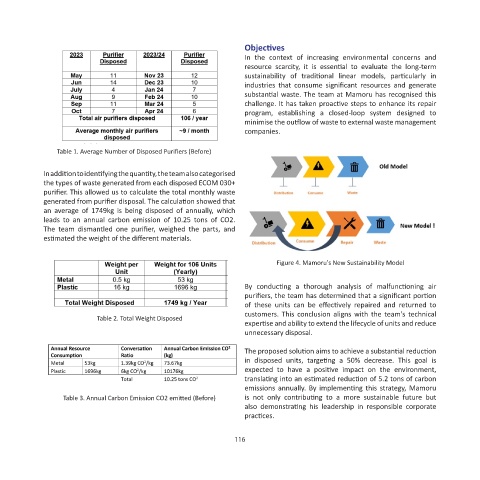
                Table 1. Average Number of Disposed Purifiers (Before)

            In addition to identifying the quantity, the team also categorised
            the types of waste generated from each disposed ECOM 030+
            purifier. This allowed us to calculate the total monthly waste
            generated from purifier disposal. The calculation showed that
            an  average  of  1749kg  is  being  disposed  of  annually,  which
            leads  to  an  annual  carbon  emission  of  10.25  tons  of  CO2.
            The  team  dismantled  one  purifier,  weighed  the  parts,  and
            estimated the weight of the different materials.


                                                                         Figure 4. Mamoru's New Sustainability Model


                                                                 By  conducting  a  thorough  analysis  of  malfunctioning  air
                                                                 purifiers, the team has determined that a significant portion
                                                                 of  these  units  can  be  effectively  repaired  and  returned  to
                                                                 customers.  This  conclusion  aligns  with  the  team's  technical
                          Table 2. Total Weight Disposed
                                                                 expertise and ability to extend the lifecycle of units and reduce
                                                                 unnecessary disposal.

                                                                 The proposed solution aims to achieve a substantial reduction
                                                                 in  disposed  units,  targeting  a  50%  decrease.  This  goal  is
                                                                 expected  to  have  a  positive  impact  on  the  environment,
                                                                 translating into an estimated reduction of 5.2 tons of carbon
                                                                 emissions annually. By implementing this strategy, Mamoru
                 Table 3. Annual Carbon Emission CO2 emitted (Before)  is  not  only  contributing  to  a  more  sustainable  future  but
                                                                 also  demonstrating  his  leadership  in  responsible  corporate
                                                                 practices.


                                                              116

