Page 16 - 2020 February E-issue
P. 16
Environmental Requirements for the Processing Room
Can vary widely based on process
Packaging
Extraction
Edible Manufacturing
Oils The Station 26 hydropower
facility was constructed in
1952 and is located on Court
Street in Rochester, NY. The
station utilizes a Kaplan style
turbine generator to produce
Energy Intensity 3 megawatts of energy from
the Genesee River. Part 1 of
the Station 26 Hydropower
Station project was featured as
the cover story in the January
e-issue of the Rochester
Engineer. The story focused
on the overall purpose, project
management, and construction
methods implemented. This story,
Part 2, focuses on the design
development and engineering plans
for the tailrace diversion wall, a draft
tube access hatch, and the gantry
hoist system for two tailrace isolation
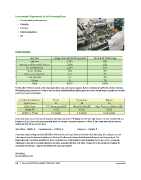
For this article Id like to expand on the largest operational cost, and it just so happens that my knowledge lies within the electrical industry. gates.
With lighting being at number #1 I’d like to note that some outdated/inefficient lighting types are used in certain stages of growth as the plants
prefer these certain wavelengths. The purpose of the tailrace diversion
wall is to deflect river water away from
the tailrace, which conveys water
from the draft tube after it has gone
through the turbine. With the tailwater
elevation lower than the river bed,
there is more water head differential
between the intake and the tailrace.
This creates less back pressure on
the turbine allowing it to operate more
In the chart above you see that based on grower input they may prefer LED lighting over the older style lamps. As of now I couldn’t find any efficiently due to the increase in flow. The new tailrace
literature on if LED does in fact produce greater yields. As a means of general comparison of W/sq. ft. here a few areas that you may be wall was designed by Bergmann, who recommended
familiar with that still are not even close: raising the height 1 foot to reduce the likelihood of
overtopping while not increasing the water surface
Open Office ~ .98W/sq. ft. Operating Room ~ 2.48W/sq. ft. Classroom ~ 1.24W/sq. ft. elevation in the Genesee River during a flood event, as
required by FEMA.
I have truly enjoyed writing about this $20 Billion-dollar industry and I hope that you found this article interesting. Its exciting to see such
a local impact from this industry hit right here in Western NY with manufacturing of both Medicinal Marijuana and Hemp products. The A team of engineers from Bergmann, HDR, and LaBella
Engineering and Construction work that has been created because of this industry is truly demanding and, as you can see, technically collaborated to obtain the permits from local, state, and
federal agencies to conduct the work. A Floodplain
challenging. I cant wait to see what happens in the future, especially with New York State. I believe its on the priority list to legalize for Development Permit was required, so Bergmann
recreational use this year. I suppose we will find out! I hope you enjoyed! completed a hydraulic analysis of the river (FEMA no
rise Report) that determined the project would not cause
any rise to the published FEMA base flood elevations
Brett Eliasz within the floodway. Although raising the wall more than
Current RES Director one foot would benefit the generation efficiency, it would
have resulted in an unpermitted incremental rise in the
16 | The ROCHESTER ENGINEER FEBRUARY 2020 cover article