


Page 878 - Basic Electrical Engineering
P. 878
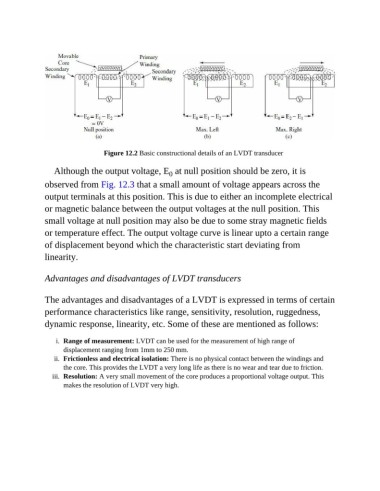
Figure 12.2 Basic constructional details of an LVDT transducer


                  Although the output voltage, E  at null position should be zero, it is
                                                       0
               observed from Fig. 12.3 that a small amount of voltage appears across the

               output terminals at this position. This is due to either an incomplete electrical
               or magnetic balance between the output voltages at the null position. This

               small voltage at null position may also be due to some stray magnetic fields
               or temperature effect. The output voltage curve is linear upto a certain range

               of displacement beyond which the characteristic start deviating from
               linearity.


               Advantages and disadvantages of LVDT transducers


               The advantages and disadvantages of a LVDT is expressed in terms of certain
               performance characteristics like range, sensitivity, resolution, ruggedness,

               dynamic response, linearity, etc. Some of these are mentioned as follows:

                   i.  Range of measurement: LVDT can be used for the measurement of high range of
                     displacement ranging from 1mm to 250 mm.
                  ii.  Frictionless and electrical isolation: There is no physical contact between the windings and
                     the core. This provides the LVDT a very long life as there is no wear and tear due to friction.
                  iii.  Resolution: A very small movement of the core produces a proportional voltage output. This
                     makes the resolution of LVDT very high.

