


Page 198 - Demo
P. 198
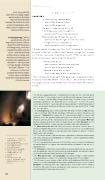
In art, the symbol for Saint John is an eagle. Eagles were thought to y higher than any other bird and became the emblem for John, whose Gospel begins with a ight to mystic heights in the creation of the cosmos.
In the beginning. The rst words of John echo the beginning of Genesis, the rst book in the Old Testament: “In the beginning, when God created the heavens and the earth—and the earth was without form or shape, with darkness over the abyss and a mighty wind sweeping over the waters—Then God said: Let there be light, and there was light” (Genesis 1:1-3). In Genesis, it is God’s all- powerful word that creates. In John, Jesus is that Word made esh: the creative Word of God incarnate.
a. [1:1] 10:30; Gn 1:1–5; Jb 28:12–27; Prv 8:22–25; Wis 9:1–2; 1 Jn 1:1–2; Col 1:1, 15; Rev 3:14; 19:13.
b. [1:3] Ps 33:9; Wis 9:1; Sir 42:15; 1 Cor 8:6; Col 1:16; Heb 1:2; Rev 3:14.
c. [1:4] 5:26; 8:12; 1 Jn 1:2.
d. [1:5] 3:19; 8:12; 9:5; 12:35, 46; Wis
7:29–30; 1 Thes 5:4; 1 Jn 2:8.
e. [1:6] Mt 3:1; Mk 1:4; Lk 3:2–3.
f. [1:7] 1:19–34; 5:33.
g. [1:8] 5:35.
h. [1:9] 3:19; 8:12; 9:39; 12:46.
i. [1:12] 3:11–12; 5:43–44; 12:46–50; Gal 3:26; 4:6–7; Eph 1:5; 1 Jn 3:2.
j. [1:13] 3:5–6.
186
JOHN
CHAPTER 1
i. prologue*
1In the beginning* was the Word, and the Word was with God, and the Word was God.a
2He was in the beginning with God. 3* All things came to be through him,
and without him nothing came to be.b What came to be 4through him was life,
and this life was the light of the human race;c 5* the light shines in the darkness,d
and the darkness has not overcome it.
6* A man named John was sent from God.e 7He came for testimony,* to testify to the light, so that all might believe through him.f 8He was not the light, but came to testify to the light.g 9The true light, which enlightens everyone, was coming into the world.h
10He was in the world,
and the world came to be through him, but the world did not know him.
11He came to what was his own,
but his own people* did not accept him.
12i But to those who did accept him he gave power to become children of God, to those who believe in his name, 13* j who were born not by natural generation nor by human choice nor by a man’s decision but of God.
* [1:1–18] The prologue states the main themes of the gospel: life, light, truth, the world, testimony, and the preexistence of Jesus Christ, the incarnate Logos, who reveals God the Father. In origin, it was probably an early Christian hymn. Its closest parallel is in other christological hymns, Col 1:15–20 and Phil 2:6–11. Its core (Jn 1:1–5, 10–11, 14) is poetic in structure, with short phrases linked by “staircase parallelism,” in which the last word of one phrase becomes the rst word of the next. Prose inserts (at least Jn 1:6–8, 15) deal with John the Baptist.
* [1:1] In the beginning: also the rst words of the Old Testament (Gn 1:1). Was: this verb is used three times with di erent meanings in this verse: existence, relationship, and predication. The Word (Greek logos): this term combines God’s dynamic, creative word (Genesis), personi ed preexistent Wisdom as the instrument of God’s creative activity (Proverbs), and the ultimate intelligibility of reality (Hellenistic philosophy). With God: the Greek preposition here connotes communication with another. Was God: lack of a de nite article with “God” in Greek signi es predication rather than identi cation.
* [1:3] What came to be: while the oldest manuscripts have no punctuation here, the corrector of Bodmer Papyrus P75, some manuscripts, and the Ante-Nicene Fathers take this phrase with what follows, as staircase parallelism. Connection with Jn 1:3 re ects fourth-century anti-Arianism.
* [1:5] The ethical dualism of light and darkness is paralleled in intertestamental literature and in the Dead Sea Scrolls. Overcome: “comprehend” is another possible translation, but cf. Jn 12:35; Wis 7:29–30.
* [1:6] John was sent just as Jesus was “sent” (Jn 4:34) in divine mission. Other references to John the Baptist in this gospel emphasize the di erences between them and John’s subordinate role.
* [1:7] Testimony: the testimony theme of John is introduced, which portrays Jesus as if on trial throughout his ministry. All testify to Jesus: John the Baptist, the Samaritan woman, scripture, his works, the crowds, the Spirit, and his disciples.
* [1:11] What was his own. . .his own people: rst a neuter, literally, “his own property/ possession” (probably = Israel), then a masculine, “his own people” (the Israelites).
* [1:13] Believers in Jesus become children of God not through any of the three natural causes mentioned but through God who is the immediate cause of the new spiritual life. Were born: the Greek verb can mean “begotten” (by a male) or “born” (from a female or of parents). The variant “he who was begotten,” asserting Jesus’ virginal conception, is weakly attested in Old Latin and Syriac versions.


