


Page 200 - Demo
P. 200
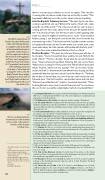
1:29 The Old Testament book of Exodus describes the Passover ritual: each Hebrew family is to slaughter a lamb and with its blood mark the doorposts and lintels of their house, so that the angel sent to destroy the rst-born of the Egyptians will “pass over,” sparing those within the house (see Exodus 12). The prophet Isaiah speaks of the su ering servant of God, who is “like a lamb led to slaughter” (53:7). John the Baptist evokes these images in calling Jesus the “Lamb of God.” By his death on the cross Jesus will bring new life out of the death of sin.
1:31 There is continuity between the ministry of John and that of Jesus. Here, John seems to send two of his disciples to follow Jesus.
s. [1:26] Mt 3:11; Mk 1:7–8; Lk 3:16; Acts 13:25.
t. [1:29] 1:36; Ex 12; Is 53:7; Rev 5–7; 17:14.
u. [1:30] 1:15; Mt 3:11; Mk 1:7; Lk 3:16.
v. [1:33] Sg 5:2; Is 11:2; Hos 11:11; Mt 3:16;
Mk 1:10; Lk 3:21–22.
w. [1:33] Is 42:1; Mt 3:11; Mk 1:8; Lk 3:16.
x. [1:34] Is 42:1; Mt 3:17; Mk 1:11; Lk 9:35.
y. [1:35–51] Mt 4:18–22; Mk 1:16–20; Lk
5:1–11.
z. [1:41] 4:25.
a. [1:42] Mt 16:18; Mk 3:16.
188
JOHN
there is one among you whom you do not recognize,s 27the one who is coming after me, whose sandal strap I am not worthy to untie.” 28This happened in Bethany across the Jordan,* where John was baptizing. John the Baptist’s Testimony to Jesus. 29The next day he saw Jesus coming toward him and said, “Behold, the Lamb of God,* who takes away the sin of the world.t 30* He is the one of whom I said,u ‘A man is coming after me who ranks ahead of me because he existed before me.’ 31I did not know him,* but the reason why I came baptizing with water was that he might be made known to Israel.” 32John testi ed further, saying, “I saw the Spirit come down like a dove* from the sky and remain upon him. 33I did not know him,v but the one who sent me to baptize with water told me, ‘On whomever you see the Spirit come down and remain, he is the one who will baptize with the holy Spirit.’w 34* x Now I have seen and testi ed that he is the Son of God.”
The First Disciples.y 35The next day John was there again with two of his disciples, 36and as he watched Jesus walk by, he said, “Behold, the Lamb of God.”* 37The two disciples* heard what he said and followed Jesus. 38Jesus turned and saw them following him and said to them, “What are you looking for?” They said to him, “Rabbi” (which translated means Teacher), “where are you staying?” 39He said to them, “Come, and you will see.” So they went and saw where he was staying, and they stayed with him that day. It was about four in the afternoon.* 40Andrew, the brother of Simon Peter, was one of the two who heard John and followed Jesus. 41He rst found his own brother Simon and told him, “We have found the Messiah”* (which is translated Anointed).z 42Then he brought him to Jesus. Jesus looked at him and said, “You are Simon the son of John;* you will be called Cephas” (which is translated Peter).a
..* [1:26] I baptize with water: the synoptics add “but he will baptize you with the holy Spirit” (Mk 1:8) or “. . .holy Spirit and re” (Mt 3:11; Lk 3:16). John’s emphasis is on puri cation and preparation for a better baptism.
* [1:28] Bethany across the Jordan: site unknown. Another reading is “Bethabara.”
* [1:29] The Lamb of God: the background for this title may be the victorious apocalyptic lamb who would destroy evil in the world (Rev 5–7; 17:14); the paschal lamb, whose blood saved Israel (Ex 12); and/or the su ering servant led like a lamb to the slaughter as a sin-
o ering (Is 53:7, 10).
* [1:30] He existed before me: possibly as Elijah (to come, Jn 1:27); for the evangelist and
his audience, Jesus’ preexistence would be implied (see note on Jn 1:1).
* [1:31] I did not know him: this gospel shows no knowledge of the tradition (Lk 1) about the kinship of Jesus and John the Baptist. The reason why I came baptizing with water: in this gospel, John’s baptism is not connected with forgiveness of sins; its purpose is
revelatory, that Jesus may be made known to Israel.
* [1:32] Like a dove: a symbol of the new creation (Gn 8:8) or the community of Israel (Hos
11:11). Remain: the rst use of a favorite verb in John, emphasizing the permanency of the relationship between Father and Son (as here) and between the Son and the Christian. Jesus is the permanent bearer of the Spirit.
* [1:34] The Son of God: this reading is supported by good Greek manuscripts, including the Chester Beatty and Bodmer Papyri and the Vatican Codex, but is suspect because it harmonizes this passage with the synoptic version: “This is my beloved Son” (Mt 3:17; Mk 1:11; Lk 3:22). The poorly attested alternate reading, “God’s chosen One,” is probably a reference to the Servant of Yahweh (Is 42:1).
* [1:36] John the Baptist’s testimony makes his disciples’ following of Jesus plausible.
* [1:37] The two disciples: Andrew (Jn 1:40) and, traditionally, John, son of Zebedee (see
note on Jn 13:23).
* [1:39] Four in the afternoon: literally, the tenth hour, from sunrise, in the Roman
calculation of time. Some suggest that the next day, beginning at sunset, was the sabbath;
they would have stayed with Jesus to avoid travel on it.
* [1:41] Messiah: the Hebrew word māšîah , “anointed one” (see note on Lk 2:11), appears
in Greek as the transliterated messias only here and in Jn 4:25. Elsewhere the Greek
translation christos is used.
* [1:42] Simon, the son of John: in Mt 16:17, Simon is called Bariōna, “son of Jonah,”
a di erent tradition for the name of Simon’s father. Cephas: in Aramaic = the Rock; cf. Mt 16:18. Neither the Greek equivalent Petros nor, with one isolated exception, Cephas is attested as a personal name before Christian times.


