


Page 199 - Demo
P. 199
14And the Word became  esh*
and made his dwelling among us, and we saw his glory,
the glory as of the Father’s only Son, full of grace and truth.k
15* John testi ed to him and cried out, saying, “This was he of whom I said,l ‘The one who is coming after me ranks ahead of me because he existed before me.’” 16From his fullness we have all received, grace in place of grace,* 17because while the law was given through Moses, grace and truth came through Jesus Christ.m 18No one has ever seen God. The only Son, God,* who is at the Father’s side, has revealed him.n
ii. the BooK of signs
John the Baptist’s Testimony to Himself. 19* And this is the testimony of John. When the Jews* from Jerusalem sent priests and Levites [to him] to ask him, “Who are you?” 20* he admitted and did not deny it, but admitted,o “I am not the Messiah.” 21So they asked him, “What are you then? Are you Elijah?”* And he said, “I am not.” “Are you the Prophet?” He answered, “No.”p 22So they said to him, “Who are you, so we can give an answer to those who sent us? What do you have to say for yourself?” 23He said:
“I am ‘the voice of one crying out in the desert,q “Make straight the way of the Lord,”’*
as Isaiah the prophet said.” 24Some Pharisees* were also sent. 25They asked him, “Why then do you baptize if you are not the Messiah or Elijah or the Prophet?”r 26John answered them, “I baptize with water;* but
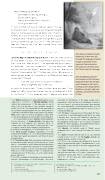
John does not speak of angels, shepherds, or wise men, but through the language of poetry he goes to the heart of the mystery of the Incarnation. Each year, on Christmas Day, the Church reads this passage.
John the Baptist points out the blindness of the Pharisees, telling them that the one they seek is already in their midst, but they do not recognize him. Blindness and sight, light and darkness, are constant themes in John.
* [1:14] Flesh: the whole person, used probably against docetic tendencies (cf. 1 Jn 4:2; 2 Jn 7). Made his dwelling: literally, “pitched his tent/tabernacle.” Cf. the tabernacle or tent of meeting that was the place of God’s presence among his people (Ex 25:8–9). The incarnate Word is the new mode of God’s presence among his people. The Greek verb has the same consonants as the Aramaic word for God’s presence (Shekinah). Glory: God’s visible manifestation of majesty in power, which once  lled the tabernacle (Ex 40:34) and the temple (1 Kgs 8:10– 11, 27), is now centered in Jesus. Only Son: Greek, monogenēs, but see note on Jn 1:18. Grace and truth: these words may represent two Old Testament terms describing Yahweh in covenant relationship with Israel (cf. Ex 34:6), thus God’s “love” and “ delity.” The Word shares Yahweh’s covenant qualities.
* [1:15] This verse, interrupting Jn 1:14, 16 seems drawn from Jn 1:30.
* [1:16] Grace in place of grace: replacement of the Old Covenant with the New (cf. Jn 1:17). Other possible translations are “grace upon grace” (accumulation) and “grace for grace”
(correspondence).
* [1:18] The only Son, God: while the vast majority of later textual
witnesses have another reading, “the Son, the only one” or “the only Son,” the translation above follows the best and earliest manuscripts, monogenēs theos, but takes the  rst term to mean not just “Only One” but to include a  lial relationship with the Father, as at Lk 9:38 (“only child”) or Heb 11:17 (“only son”) and as translated at Jn 1:14. The Logos is thus “only Son” and God but not Father/God.
* [1:19–51] The testimony of John the Baptist about the Messiah and Jesus’ self-revelation to the  rst disciples. This section
k. [1:14] Ex 16:10; 24:17; 25:8–9; 33:22; 34:6; Sir 24:4, 8; Is 60:1; Ez 43:7; Jl 4:17; Heb 2:14; 1 Jn 1:2; 4:2; 2 Jn 7.
l. [1:15] 1:30; 3:27–30.
m. [1:17] 7:19; Ex 31:18; 34:28.
constitutes the introduction to the gospel proper and is connected with the prose inserts in the prologue. It develops the major theme of testimony in four scenes: John’s negative testimony about himself; his positive testimony about Jesus; the revelation of Jesus to Andrew and Peter; the revelation of Jesus to Philip and Nathanael.
* [1:19] The Jews: throughout most of the gospel, the “Jews” does not refer to the Jewish people as such but to the hostile authorities, both Pharisees and Sadducees, particularly in Jerusalem, who refuse to believe in Jesus. The usage re ects the atmosphere, at the end of the  rst century, of polemics between church and synagogue, or possibly it refers to Jews as representative of a hostile world (Jn 1:10–11).
* [1:20] Messiah: the anointed agent of Yahweh, usually considered to be of Davidic descent. See further the note on Jn 1:41.
* [1:21] Elijah: the Baptist did not claim to be Elijah returned to earth (cf. Mal 3:19; Mt 11:14). The Prophet: probably the prophet like Moses (Dt 18:15; cf. Acts 3:22).
* [1:23] This is a repunctuation and reinterpretation (as in the synoptic gospels and Septuagint) of the Hebrew text of Is 40:3 which reads, “A voice cries out: In the desert prepare the way of the LORD.”
* [1:24] Some Pharisees: other translations, such as “Now they had been sent from the Pharisees,” misunderstand the grammatical construction. This is a di erent group from that in Jn 1:19; the priests and Levites would have been Sadducees, not Pharisees.
o. [1:20] 3:28; Lk 3:15; Acts 13:25.
p. [1:21] Dt 18:15, 18; 2 Kgs 2:11; Sir 48:10; Mal 3:1, 23; Mt 11:14; 17:11–13;
Mk 9:13; Acts 3:22.
q. [1:23] Is 40:3; Mt 3:3; Mk 1:2; Lk 3:4.
n. [1:18] 5:37; 6:46; Ex 33:20; Jgs 13:21–22; 1 Tm 6:16; 1 Jn 4:12.
r. [1:25] Ez 36:25; Zec 13:1; Mt 16:14.
187


