


Page 203 - Demo
P. 203
JOHN -
scripture,i “Zeal for your house
will consume me.” 18At this the
Jews answered and said to him,
“What sign can you show us for
doing this?”j 19Jesus answered
and said to them,* k “Destroy
this temple and in three days
I will raise it up.” 20The Jews
said, “This temple has been
under construction for forty-
six years,* and you will raise it
up in three days?” 21But he was
speaking about the temple of
his body. 22Therefore, when he
was raised from the dead, his
disciples remembered that he
had said this, and they came to believe the scripture and the word Jesus had spoken.l
23While he was in Jerusalem for the feast of Passover, many began to believe in his name when they saw the signs he was doing.m 24But Jesus would not trust himself to them because he knew them all, 25and did not need anyone to testify about human nature. He himself understood it well.n
He came to Jesus at night and said to him, “Rabbi, we know that you are a teacher who has come from God, for no one can do these signs that you are doing unless God is with him.”b 3Jesus answered and said to him, “Amen, amen, I say to you, no one can see the kingdom of God without being born* from above.” 4Nicodemus said to him, “How can a person once grown old be born again? Surely he cannot reenter his mother’s womb and be born again, can he?”c 5Jesus answered, “Amen, amen, I say to you, no one can enter the kingdom of God without being born of water and Spirit.d 6What is born of esh is esh and what is born of spirit is spirit.e 7Do not be amazed that I told you, ‘You must be born from above.’ 8The wind* blows where it wills, and you can hear the sound it makes, but you do not know where it comes from or where it goes; so it is with everyone who is born of the
Nicodemus.
3*
1a Now there was a Pharisee named Nicodemus, a ruler of the Jews.*
2
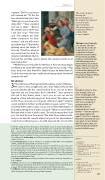
The scene of Jesus driving the moneychangers of
the temple has inspired several artistic representations.
This masterpiece by by Quentin Metsys (1466-1530)
is one example.
The Jews. John frequently uses the term “the Jews” to describe those who are in opposition to Jesus. It
is important to keep in
mind the context in which the Gospel was probably written: a community that had su ered rejection or persecution by local Jewish leaders. When John uses the phrase “the Jews,” it should not be read as applying to an entire people, but rather to the group of religious o cials in opposition to Jesus.
3:2
Nicodemus comes to Jesus only “at night,” that is, in secret. His dialogue with Jesus shows that he is still in darkness in other ways as well. Jesus is speaking of spiritual rebirth, but Nicodemus tries to understand Jesus’ words literally—“How can a person once grown old be born again?” (3:4). This is a pattern that will be repeated over and over again, as Jesus’ hearers take him at face value, not understanding the symbolic portent of what he says.
CHAPTER 2
i. [2:17] Ps 69:9.
j. [2:18] 6:30.
k. [2:19] Mt 24:2; 26:61; 27:40; Mk 13:2; 14:58; 15:29; Lk 21:6; Acts 6:14.
l. [2:22] 5:39; 12:16; 14:26; 20:9; Mt 12:6; Lk 24:6–8; Rev 21:22.
m. [2:23] 4:45.
n. [2:25] 1 Kgs 8:39; Ps 33:15; 94:11;
Sir 42:18; Jer 17:10; 20:12.
CHAPTER 3
a. [3:1] 7:50–51; 19:39.
b. [3:2] 9:4, 16, 33; 10:21; 11:10; 13:30;
Mt 22:16; Mk 12:14; Lk 20:21.
c. [3:4] 1:13.
d. [3:5] 1:32; 7:39; 19:30, 34–35; Is 32:15;
44:3; Ez 36:25–27; Jl 3:1–2.
e. [3:6] 6:63; 1 Cor 15:44–50.
191
* [2:19] This saying about the destruction of the temple occurs in various forms (Mt 24:2; 27:40; Mk 13:2; 15:29; Lk 21:6; cf. Acts 6:14). Mt 26:61 has: “I can destroy the temple of God. . .”; see note there. In Mk 14:58, there is a metaphorical contrast with a new temple: “I will destroy this temple made with hands and within three days I will build another not made with hands.” Here it is symbolic of Jesus’ resurrection and the resulting community (see Jn 2:21 and Rev 21:2). In three days: an Old Testament expression for a short, inde nite period of time; cf. Hos 6:2.
* [2:20] Forty-six years: based on references in Josephus (Jewish Wars 1:401; Antiquities 15:380), possibly the spring of A.D. 28. Cf. note on Lk 3:1.
* [3:1–21] Jesus instructs Nicodemus on the necessity of a new birth from above. This scene in Jerusalem at Passover exempli es the faith engendered by signs (Jn 2:23). It continues the self-manifestation of Jesus in Jerusalem begun in Jn 2. This is the rst of the Johannine discourses, shifting from dialogue to monologue (Jn 3:11–15) to re ection of the evangelist (Jn 3:16–21). The shift from singular through Jn 3:10 to plural in Jn 3:11 may re ect the early church’s controversy with the Jews.
* [3:1] A ruler of the Jews: most likely a member of the Jewish council, the Sanhedrin; see note on Mk 8:31.
* [3:3] Born: see note on Jn 1:13. From above: the Greek adverb anōthen means both “from above” and “again.” Jesus means “from above” (see Jn 3:31) but Nicodemus misunderstands it as “again.” This misunderstanding serves as a springboard for further instruction.
* [3:8] Wind: the Greek word pneuma (as well as the Hebrew rûah) means both “wind” and “spirit.” In the play on the double meaning, “wind” is primary.


