


Page 204 - Demo
P. 204
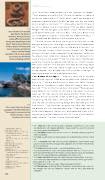
3:14 Jesus alludes to an episode described in the book of Numbers, when poisonous snakes a ict the Israelites during their wanderings in the desert. God instructs Moses to make a serpent of bronze and raise it on a pole, and all who look at it will be healed (Numbers 21:6-9). Jesus, raised up on the cross, will be the source of healing and life.
3:16 This is one of the most famous passages in the New Testament. The evangelist summarizes the mission of Jesus—not to condemn, but to save.
f. [3:8] Eccl 11:4–5; Acts 2:2–4.
g. [3:11] 3:32, 34; 8:14; Mt 11:27.
h. [3:12] 6:62–65; Wis 9:16–17; 1 Cor 15:40;
2 Cor 5:1; Phil 2:10; 3:19–20.
i. [3:13] 1:18; 6:62; Dn 7:13; Rom 10:6;
Eph 4:9.
j. [3:14] 8:28; 12:32, 34; Nm 21:4–9;
Wis 16:5–7.
k. [3:16] 1 Jn 4:9.
l. [3:17] 5:22, 30; 8:15–18; 12:47.
m. [3:18] 5:24; Mk 16:16.
n. [3:19] 1:5, 9–11; 8:12; 9:5.
o. [3:20] Jb 24:13–17.
p. [3:21] Gn 47:29 LXX; Jos 2:14 LXX; 2 Sm
2:6 LXX; 15:20 LXX; Tb 4:6 LXX; 13:6; Is
26:10 LXX; Mt 5:14–16.
q. [3:22–23] 4:1–2.
r. [3:24] Mt 4:12; 14:3; Mk 1:14; 6:17; Lk 3:20.
s. [3:26] 1:26, 32–34, 36.
t. [3:27]19:11;1Cor4:7;2Cor3:5;Heb5:4.
u. [3:28] 1:20–23; Lk 3:15.
v. [3:29] 15:11; 17:13; Mt 9:15.
w. [3:30] 2 Sm 3:1.
192
JOHN
Spirit.”f 9Nicodemus answered and said to him, “How can this happen?” 10Jesus answered and said to him, “You are the teacher of Israel and you do not understand this? 11Amen, amen, I say to you, we speak of what we know and we testify to what we have seen, but you people do not accept our testimony.g 12If I tell you about earthly things and you do not believe, how will you believe if I tell you about heavenly things?h 13No one has gone up to heaven except the one who has come down from heaven, the Son of Man.i 14And just as Moses lifted up* the serpent in the desert, so must the Son of Man be lifted up,j 15* so that everyone who believes in him may have eternal life.”
16For God so loved the world that he gave* his only Son, so that everyone who believes in him might not perish but might have eternal life.k 17For God did not send his Son into the world to condemn* the world, but that the world might be saved through him.l 18Whoever believes in him will not be condemned, but whoever does not believe has already been condemned, because he has not believed in the name of the only Son of God.m 19* And this is the verdict,n that the light came into the world, but people preferred darkness to light, because their works were evil. 20For everyone who does wicked things hates the light and does not come toward the light, so that his works might not be exposed.o 21But whoever lives the truth comes to the light, so that his works may be clearly seen as done in God.p
Final Witness of the Baptist. 22* After this, Jesus and his disciples went into the region of Judea, where he spent some time with them baptizing.q 23John was also baptizing in Aenon near Salim,* because there was an abundance of water there, and people came to be baptized, 24* r for John had not yet been imprisoned. 25Now a dispute arose between the disciples of John and a Jew* about ceremonial washings. 26So they came to John and said to him, “Rabbi, the one who was with you across the Jordan, to whom you testi ed, here he is baptizing and everyone is coming to him.”s 27John answered and said, “No one can receive anything except what has been given him from heaven.t 28You yourselves can testify that I said [that] I am not the Messiah, but that I was sent before him.u 29The one who has the bride is the bridegroom; the best man,* who stands and listens to him, rejoices greatly at the bridegroom’s voice. So this joy of mine has been made complete.v 30He must increase; I must decrease.”w
* [3:14] Lifted up: in Nm 21:9, Moses simply “mounted” a serpent upon a pole. John here substitutes a verb implying glori cation. Jesus, exalted to glory at his cross and resurrection, represents healing for all.
* [3:15] Eternal life: used here for the rst time in John, this term stresses quality of life rather than duration.
* [3:16] Gave: as a gift in the incarnation, and also “over to death” in the cruci xion; cf. Rom 8:32.
* [3:17–19] Condemn: the Greek root means both judgment and condemnation. Jesus’ purpose is to save, but his coming provokes judgment; some condemn themselves by turning from the light.
* [3:19] Judgment is not only future but is partially realized here and now.
* [3:22–26] Jesus’ ministry in Judea is only loosely connected with Jn 2:13–3:21; cf. Jn 1:19– 36. Perhaps John the Baptist’s further testimony was transposed here to give meaning to
“water” in Jn 3:5. Jesus is depicted as baptizing (Jn 3:22); contrast Jn 4:2.
* [3:23] Aenon near Salim: site uncertain, either in the upper Jordan valley or in Samaria.
* [3:24] A remark probably intended to avoid objections based on a chronology like that of
the synoptics (Mt 4:12; Mk 1:14).
* [3:25] A Jew: some think Jesus is meant. Many manuscripts read “Jews.”
* [3:29] The best man: literally, “the friend of the groom,” the shoshben of Jewish tradition,
who arranged the wedding. Competition between him and the groom would be unthinkable.


