


Page 206 - Demo
P. 206
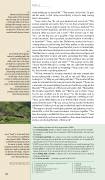
4:6 Women would normally draw water in the morning and evening, the cooler parts of the day, and not at noon. Perhaps the woman comes at this time to avoid the criticism or rejection of her peers, who would avoid a known sinner.
4:27 Jesus breaks through two taboos in speaking with the woman and inviting her faith, since she is not only a woman but a Samaritan. The dialogue with the woman shows a pattern of a gradually deepening understanding of Jesus, in spite of all the barriers in the way—from societal norms, to culture and customs, to the woman’s own sinful past, to misunderstanding and misinterpretation. The Samaritan woman’s journey of discovery echoes that of every disciple.
Jesus’ “food” is to do God’s will: his own thirst is satis ed by the woman’s faith. “When he asked the Samaritan woman for water to drink, / he had already created the gift of faith within her / and so ardently did he thirst for her faith, / that he kindled in her the re of divine love” (Roman Missal).1
1 Preface for the Third Sunday of Lent
194
JOHN
water welling up to eternal life.”e 15The woman said to him, “Sir, give me this water, so that I may not be thirsty or have to keep coming here to draw water.”
16Jesus said to her, “Go call your husband and come back.” 17The woman answered and said to him, “I do not have a husband.” Jesus answered her, “You are right in saying, ‘I do not have a husband.’ 18For you have had ve husbands, and the one you have now is not your husband. What you have said is true.”f 19The woman said to him, “Sir, I can see that you are a prophet.g 20Our ancestors worshiped on this mountain;* but you people say that the place to worship is in Jerusalem.”h 21Jesus said to her, “Believe me, woman, the hour is coming when you will worship the Father neither on this mountain nor in Jerusalem. 22You people worship what you do not understand; we worship what we understand, because salvation is from the Jews.i 23But the hour is coming, and is now here, when true worshipers will worship the Father in Spirit and truth;* and indeed the Father seeks such people to worship him. 24God is Spirit, and those who worship him must worship in Spirit and truth.”j 25* The woman said to him, “I know that the Messiah is coming,k the one called the Anointed; when he comes, he will tell us everything.” 26Jesus said to her, “I am he,* the one who is speaking with you.”l
27At that moment his disciples returned, and were amazed that he was talking with a woman,* but still no one said, “What are you looking for?” or “Why are you talking with her?” 28The woman left her water jar and went into the town and said to the people, 29“Come see a man who told me everything I have done. Could he possibly be the Messiah?” 30They went out of the town and came to him. 31Meanwhile, the disciples urged him, “Rabbi, eat.” 32But he said to them, “I have food to eat of which you do not know.” 33So the disciples said to one another, “Could someone have brought him something to eat?” 34Jesus said to them, “My food is to do the will of the one who sent me and to nish his work.m 35Do you not say, ‘In four months* the harvest will be here’? I tell you, look up and see the elds ripe for the harvest.n 36The reaper is already* receiving his payment and gathering crops for eternal life, so that the sower and reaper can rejoice together.o 37For here the saying is veri ed that ‘One sows and another reaps.’p 38I sent you to reap what you have not worked for; others have done the work, and you are sharing the fruits of their work.”
Hebrew ’adônai, substituted for the tetragrammaton YHWH.
* [4:20] This mountain: Gerizim, on which a temple was erected in the fourth century B.C.
by Samaritans to rival Mount Zion in Jerusalem; cf. Dt 27:4 (Mount Ebal = the Jews’ term
for Gerizim).
* [4:23] In Spirit and truth: not a reference to an interior worship within one’s own spirit.
The Spirit is the spirit given by God that reveals truth and enables one to worship God
appropriately (Jn 14:16–17). Cf. “born of water and Spirit” (Jn 3:5).
* [4:25] The expectations of the Samaritans are expressed here in Jewish terminology. They
did not expect a messianic king of the house of David but a prophet like Moses (Dt 18:15).
* [4:26] I am he: it could also be translated “I am,” an Old Testament self-designation of
Yahweh (Is 43:3, etc.); cf. Jn 6:20; 8:24, 28, 58; 13:19; 18:5–6, 8. See note on Mk 6:50.
* [4:27] Talking with a woman: a religious and social restriction that Jesus is pictured
treating as unimportant.
* [4:35] ‘In four months. . . ’: probably a proverb; cf. Mt 9:37–38.
e. [4:14] 6:35, 58; 7:37–39; Is 44:3; 49:10; Jl 4:18; Rev 7:16; 21:6.
f. [4:18] 2 Kgs 17:24–34.
g. [4:19] 9:17; Hos 1:3.
h. [4:20] Dt 11:29; 27:4; Jos 8:33; Ps 122:1–5.
i. [4:22] 2 Kgs 17:27; Ps 76:2–3.
j. [4:24] 2 Cor 3:17.
k. [4:25] 1:41.
l. [4:26] 9:37.
m. [4:34] 5:30, 36; 6:38; 9:4; 17:4.
n. [4:35] Mt 9:37–38; Lk 10:2; Rev 14:15.
o. [4:36] Ps 126:5–6; Am 9:13–14.
p. [4:37] Dt 20:6; 28:30; Jb 31:8; Mi 6:15.


