


Page 208 - Demo
P. 208
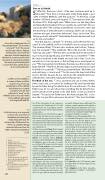
5:6 Jesus asks a simple question of the paralyzed man: “Do you want to be well?” (5:6). The answer would seem obvious. And yet, the man does not answer the question, instead complaining that he has no one to put him into the water. As the episode unfolds, the man’s physical healing fails to touch his heart, and he reports Jesus to the authorities.
5:16 Con ict over the sabbath is a common theme in all four Gospels. Jesus resists any interpretation of the sabbath which limits it to a simple avoidance of work. God continues to “work” on the sabbath, and so Jesus also works on the sabbath, giving and restoring health and life.
5:19 In this discourse, Jesus responds to those who accuse him of blasphemy by revealing his relationship with God: the relationship of Father and Son. There is a complete sharing between Father and Son: the Father “shows him everything” (5:20).
a. [5:1] 6:4.
b. [5:2] Neh 3:1, 32; 12:39.
c. [5:8] Mt 9:6; Mk 2:11; Lk 5:24; Acts 3:6.
d. [5:9] Mk 2:12; Lk 5:25; 9:14.
e. [5:10] Ex 20:8; Jer 17:21–27; Mk 3:2;
Lk 13:10; 14:1.
f. [5:13] Mt 8:18; 13:36; Mk 4:36; 7:17.
g. [5:14] 8:11; 9:2; Ez 18:20.
h. [5:16] 7:23; Mt 12:8.
i. [5:17] Ex 20:11.
j. [5:18] 7:1, 25; 8:37, 40; 10:33, 36; 14:28;
Gn 3:5–6; Wis 2:16; Mt 26:4; 2 Thes 2:4.
k. [5:19] 3:34; 8:26; 12:49; 9:4; 10:30.
l. [5:20] 3:35.
m.[5:21] 11:25; Dt 32:39; 1 Sm 2:6; 2 Kgs 5:7;
Tb 13:2; Wis 16:13; Is 26:19; Dn 7:10, 13;
12:2; Rom 4:17; 2 Cor 1:9. n. [5:22] Acts 10:42; 17:31.
196
JOHN
5Cure on a Sabbath.
* 1After this, there was a feast* of the Jews, and Jesus went up to
a2* Jerusalem. Now there is in Jerusalem at the Sheep [Gate] a pool
called in Hebrew Bethesda, with ve porticoes.b 3In these lay a large number of ill, blind, lame, and crippled.* [4]* 5One man was there who had been ill for thirty-eight years. 6When Jesus saw him lying there and knew that he had been ill for a long time, he said to him, “Do you want to be well?” 7The sick man answered him, “Sir, I have no one to put me into the pool when the water is stirred up; while I am on my way, someone else gets down there before me.” 8Jesus said to him, “Rise, take up your mat, and walk.”c 9Immediately the man became well, took up his mat, and walked.d
Now that day was a sabbath. 10So the Jews said to the man who was cured, “It is the sabbath, and it is not lawful for you to carry your mat.”e 11He answered them, “The man who made me well told me, ‘Take up your mat and walk.’” 12They asked him, “Who is the man who told you, ‘Take it up and walk’?” 13The man who was healed did not know who it was, for Jesus had slipped away, since there was a crowd there.f 14* After this Jesus found him in the temple area and said to him,g “Look, you are well; do not sin any more, so that nothing worse may happen to you.” 15The man went and told the Jews that Jesus was the one who had made him well. 16Therefore, the Jews began to persecute Jesus because he did this on a sabbath.h 17* But Jesus answered them,i “My Father is at work until now, so I am at work.” 18For this reason the Jews tried all the more to kill him, because he not only broke the sabbath but he also called God his own father, making himself equal to God.j
The Work of the Son. 19* Jesus answered and said to them, “Amen, amen, I say to you, a son cannot do anything on his own, but only what he sees his father doing;k for what he does, his son will do also. 20For the Father loves his Son and shows him everything that he himself does, and he will show him greater works than these, so that you may be amazed.l 21For just as the Father raises the dead and gives life,* so also does the Son give life to whomever he wishes.m 22Nor does the Father
* [5:1–47] The self-revelation of Jesus continues in Jerusalem at a feast. The third sign (cf. Jn 2:11; 4:54) is performed, the cure of a paralytic by Jesus’ life- giving word. The water of the pool fails to bring life; Jesus’ word does.
* [5:1] The reference in Jn 5:45–46 to Moses suggests that the feast was Pentecost. The connection of that feast with the giving of the law to Moses on Sinai, attested in later Judaism, may already have been made in the rst century. The feast could also be Passover (cf. Jn 6:4). John stresses that the day was a sabbath (Jn 5:9).
* [5:2]ThereisnonounwithSheep.“Gate”issupplied on the grounds that there must have been a gate in the NE wall of the temple area where animals for sacri ce were brought in; cf. Neh 3:1, 32; 12:39. Hebrew: more precisely, Aramaic. Bethesda: preferred to variants “Be(th)zatha” and “Bethsaida”; bêt-’ešdatayīn is given as the name of a double pool northeast of the temple area in the Qumran Copper Roll. Five porticoes: a pool excavated in Jerusalem actually has ve porticoes.
* [5:3] The Caesarean and Western recensions, fol- lowed by the Vulgate, add “waiting for the move- ment of the water.” Apparently an intermittent spring in the pool bubbled up occasionally (see Jn 5:7). This turbulence was believed to cure.
* [5:4] Toward the end of the second century in the West and among the fourth-century Greek Fathers, an additional verse was known: “For [from time to time] an angel of the Lord used to come down into the pool; and the water was stirred up, so the rst one to get in [after the stirring of the water]
was healed of whatever disease a icted him.” The angel was a popular explanation of the turbulence and the healing powers attributed to it. This verse is missing from all early Greek manuscripts and the earliest versions, including the original Vulgate. Its vocabulary is markedly non-Johannine.
* [5:14] While the cure of the paralytic in Mk 2:1–12 is associated with the forgiveness of sins, Jesus never drew a one-to-one connection between sin and su ering (cf. Jn 9:3; Lk 12:1–5), as did Ez 18:20.
* [5:17] Sabbath observance (Jn 5:10) was based on God’s resting on the seventh day (cf. Gn 2:2–3; Ex 20:11). Philo and some rabbis insisted that God’s providence remains active on the sabbath, keeping all things in existence, giving life in birth and taking it away in death. Other rabbis taught that God rested from creating, but not from judging (= ruling, governing). Jesus here claims the same authority to work as the Father, and, in the discourse that follows, the same divine prerogatives: power over life and death (Jn 5:21, 24–26) and judgment (Jn 5:22, 27).
* [5:19] This proverb or parable is taken from apprenticeship in a trade: the activity of a son is modeled on that of his father. Jesus’ dependence on the Father is justi cation for doing what the Father does.
* [5:21] Gives life: in the Old Testament, a divine prerogative (Dt 32:39; 1 Sm 2:6; 2 Kgs 5:7; Tb 13:2; Is 26:19; Dn 12:2).
* [5:22] Judgment: another divine prerogative, often expressed as acquittal or condemnation (Dt 32:36; Ps 43:1).


