


Page 209 - Demo
P. 209
JOHN
judge anyone, but he has given all judgment* to his Son,n 23so that all may honor the Son just as they honor the Father. Whoever does not honor the Son does not honor the Father who sent him. 24Amen, amen, I say to you, whoever hears my word and believes in the one who sent me has eternal life and will not come to condemnation, but has passed from death to life.o 25Amen, amen, I say to you, the hour is coming and is now here when the dead will hear the voice of the Son of God, and those who hear will live.p 26For just as the Father has life in himself, so also he gave to his Son the possession of life in himself.q 27And he gave him power to exercise judgment, because he is the Son of Man.r 28* Do not be amazed at this, because the hour is coming in which all who are in the tombs will hear his voices 29and will come out, those who have done good deeds to the resurrection of life, but those who have done wicked deeds to the resurrection of condemnation.t
30“I cannot do anything on my own; I judge as I hear, and my judgment is just, because I do not seek my own will but the will of the one who sent me.u
Witnesses to Jesus. 31v “If I testify on my own behalf, my testimony cannot be veri ed. 32But there is another* who testi es on my behalf, and I know that the testimony he gives on my behalf is true. 33You sent emissaries to John, and he testi ed to the truth.w 34I do not accept testimony from a human being, but I say this so that you may be saved.x 35He was a burning and shining lamp,* and for a while you were content to rejoice in his light.y 36But I have testimony greater than John’s. The works that the Father gave me to accomplish, these works that I perform testify on my behalf that the Father has sent me.z 37Moreover, the Father who sent me has testi ed on my behalf. But you have never heard his voice nor seen his form,a 38and you do not have his word remaining in you, because you do not believe in the one whom he has sent.b 39You search* the scriptures, because you think you have eternal life through them; even they testify on my behalf.c 40But you do not want to come to me to have life.
Unbelief of Jesus’ Hearers. 41“I do not accept human praise;* 42moreover, I know that you do not have the love of God in you.d 43I came in the name of my Father, but you do not accept me; yet if another comes in his own name, you will accept him.e 44How can you believe, when you accept praise from one another and do not seek the praise that comes from the only God?f 45Do not think that I will accuse you before the Father: the one who will accuse you is Moses, in whom you have placed your hope.g 46For if you had believed Moses, you would have believed me, because he wrote about me.h 47But if you do not believe his writings, how will you believe my words?”
5:31
“One witness alone shall not stand against someone in regard to any crime or any o ense that may have been committed; a charge shall stand only on the testimony of two or three witnesses” (Deuteronomy 19:15).
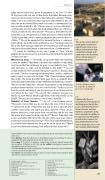
Jewish children learn to read the Scriptures at a very young age.
5:45
Traditionally, Moses is considered to be the author of the Pentateuch, the rst ve books of the Old Testament— Genesis, Exodus, Leviticus, Numbers, and Deuteronomy. Jesus concludes his address to his opponents by telling them to look to the Scriptures, for they will nd him there. If we hope to know who Jesus is, we must read the Old Testament.
197
* [5:28–29] While Jn 5:19–27 present realized eschatology, Jn 5:28–29 are future eschatology; cf. Dn 12:2.
* [5:32] Another: likely the Father, who in four di erent ways gives testimony to Jesus, as indicated in the verse groupings Jn 5:33–34, 36, 37–38, 39–40.
* [5:35] Lamp: cf. Ps 132:17—“I will place a lamp for my anointed (= David),” and possibly the description of Elijah in Sir 48:1. But only for a while, indicating the temporary and subordinate nature of John’s mission.
* [5:39] You search: this may be an imperative: “Search the scriptures, because you think that you have eternal life through them.”
* [5:41] Praise: the same Greek word means “praise” or “honor” (from others) and “glory” (from God). There is a play on this in Jn 5:44.
o. [5:24] 3:18; 8:51; 1 Jn 3:14.
p. [5:25] 5:28; 8:51; 11:25–26; Eph 2:1; 5:14; Rev 3:1.
q. [5:26] 1:4; 1 Jn 5:11.
r. [5:27] 5:22; Dn 7:13, 22; Mt 25:31; Lk 21:36.
s. [5:28] 11:43.
t. [5:29] Dn 12:2; Mt 16:27; 25:46; Acts 24:15; 2 Cor 5:10. u. [5:30] 6:38.
v. [5:31–32] 8:13–14, 18.
w. [5:33] 1:19–27; Mt 11:10–11.
x. [5:34] 1 Jn 5:9.
y. [5:35] 1:8; Ps 132:17; Sir 48:1.
z. [5:36] 10:25.
a. [5:37] 8:18; Dt 4:12, 15; 1 Jn 5:9.
b. [5:38] 1 Jn 2:14.
c. [5:39] 12:16; 19:28; 20:9; Lk 24:27, 44; 1 Pt 1:10. d. [5:42] 1 Jn 2:15.
e. [5:43] Mt 24:5, 24.
f. [5:44] 12:43.
g. [5:45] Dt 31:26.
h. [5:46] 5:39; Dt 18:15; Lk 16:31; 24:44.


