


Page 210 - Demo
P. 210
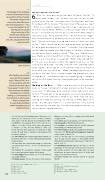
6:1 The feeding of the multitude is one of the miracles of Jesus recounted in all four Gospels. The people recognize the miraculous abundance as a sign of God’s presence—“This is truly the Prophet” (6:14). But they do not see the deeper meaning of the miracle and want to turn Jesus into an earthly king, one who will provide for their physical needs.
Lake Galilee
6:22 After feeding a multitude, Jesus teaches the people about “bread of life.” As in his conversation with the Samaritan woman about “living water” in John 4, this discourse becomes deeper and deeper as it unfolds, leading us to the mystery of the Eucharist, in which Jesus feeds his people with his own Body and Blood under the appearance of bread and wine.
JOHN
6Multiplication of the Loaves.*
1a After this, Jesus went across the Sea of Galilee [of Tiberias].* 2A large crowd followed him, because they saw the signs he was performing on the sick. 3Jesus went up on the mountain, and there he sat down with his disciples. 4The Jewish feast of Passover was near.b 5* When Jesus raised his eyes and saw that a large crowd was coming to him, he said to Philip,c “Where can we buy enough food for them to eat?” 6* He said this to test him, because he himself knew what he was going to do. 7Philip answered him, “Two hundred days’ wages* worth of food would not be enough for each of them to have a little [bit].”d 8One of his disciples, Andrew, the brother of Simon Peter, said to him, 9“There is a boy here who has ve barley loaves* and two sh; but what good are these for so many?”e 10Jesus said, “Have the people recline.” Now there was a great deal of grass* in that place. So the men reclined, about ve thousand in number.f 11Then Jesus took the loaves, gave thanks, and distributed them to those who were reclining, and also as much of the sh as they wanted.g 12When they had had their ll, he said to his disciples, “Gather the fragments left over, so that nothing will be wasted.” 13So they collected them, and lled twelve wicker baskets* with fragments from the ve barley loaves that had been more than they could eat. 14When the people saw the sign he had done, they said, “This is truly the Prophet,* the one who is to come into the world.”h 15Since Jesus knew that they were going to come and carry him o to make him king, he withdrew again to the mountain alone.i
Walking on the Water.* 16j When it was evening, his disciples went down to the sea, 17embarked in a boat, and went across the sea to Capernaum. It had already grown dark, and Jesus had not yet come to them. 18The sea was stirred up because a strong wind was blowing. 19When they had rowed about three or four miles, they saw Jesus walking on the sea* and coming near the boat, and they began to be afraid.k 20But he said to them, “It is I.* Do not be afraid.” 21They wanted to take him into the boat, but the boat immediately arrived at the shore to which they were heading.
* [6:1–15] This story of the multiplication of the loaves is the fourth sign (cf. note on Jn 5:1–47). It is the only miracle story found in all four gospels (occurring twice in Mark and Matthew). See notes on Mt 14:13–21; 15:32–39. John di ers on the roles of Philip and Andrew, the proximity of Passover (Jn 6:4), and the allusion to Elisha (see Jn 6:9). The story here symbolizes the food that is really available through Jesus. It connotes a new exodus and has eucharistic overtones.
* [6:1] [Of Tiberias]: the awkward apposition represents a later name of the Sea of Galilee. It was probably originally a marginal gloss.
* [6:5] Jesus takes the initiative (in the synoptics, the disciples do), possibly pictured as (cf. Jn 6:14) the new Moses (cf. Nm 11:13).
* [6:6] Probably the evangelist’s comment; in this gospel Jesus is never portrayed as ignorant of anything.
* [6:7] Days’ wages: literally, “denarii”; a Roman denarius is a day’s wage in Mt 20:2.
* [6:9] Barley loaves: the food of the poor. There seems an
a. [6:1–13] Mt 14:13–21; Mk 6:32–44; Lk 9:10–17.
b. [6:4] 2:13; 11:55.
c. [6:5] Nm 11:13.
d. [6:7] Mt 20:2.
e. [6:9] 2 Kgs 4:42–44.
f. [6:10] Mt 14:21; Mk 6:44.
allusion to the story of Elisha multiplying the barley bread
in 2 Kgs 4:42–44.
* [6:10] Grass: implies springtime, and therefore Passover.
Five thousand: so Mk 6:39, 44 and parallels.
* [6:13] Baskets: the word describes the typically Palestinian
wicker basket, as in Mk 6:43 and parallels.
* [6:14] The Prophet: probably the prophet like Moses (see
note on Jn 1:21). The one who is to come into the world:
probably Elijah; cf. Mal 3:1, 23.
* [6:16–21] The fth sign is a nature miracle, portraying
Jesus sharing Yahweh’s power. Cf. the parallel stories following the multiplication of the loaves in Mk 6:45–52 and Mt 14:22–33.
* [6:19] Walking on the sea: although the Greek (cf. Jn 6:16) could mean “on the seashore” or “by the sea” (cf. Jn 21:1), the parallels, especially Mt 14:25, make clear that Jesus walked upon the water. John may allude to Jb 9:8: God “treads upon the crests of the sea.”
* [6:20] It is I: literally, “I am.” See also notes on Jn 4:26 and Mk 6:50.
g. [6:11] 21:13.
h. [6:14] Dt 18:15, 18; Mal 3:1, 23; Acts 3:22.
i. [6:15] 18:36.
j. [6:16–21] Mt 14:22–27; Mk 6:45–52.
k. [6:19] Jb 9:8; Ps 29:3–4; 77:20; Is 43:16.
198
....


