


Page 205 - Demo
P. 205
JOHN -
The One from Heaven.* 31The one who comes from above is above all. The one who is of the earth is earthly and speaks of earthly things. But the one who comes from heaven [is above all].x 32He testi es to what he has seen and heard, but no one accepts his testimony.y 33Whoever does accept his testimony certi es that God is trustworthy.z 34For the one whom God sent speaks the words of God. He does not ration his gift* of the Spirit. 35The Father loves the Son and has given everything over to him.a 36Whoever believes in the Son has eternal life, but whoever disobeys the Son will not see life, but the wrath of God remains upon him.b
Jesus himself was not baptizing, just his disciples),* 3he left Judea and returned to Galilee.
The Samaritan Woman. 4He had to* pass through Samaria. 5So he came to a town of Samaria called Sychar,* near the plot of land that Jacob had given to his son Joseph.a 6Jacob’s well was there. Jesus, tired from his journey, sat down there at the well. It was about noon.
7A woman of Samaria came to draw water. Jesus said to her, “Give me a drink.” 8His disciples had gone into the town to buy food. 9* The Samaritan woman said to him, “How can you, a Jew, ask me, a Samaritan woman, for a drink?”b (For Jews use nothing in common with Samaritans.) 10* Jesus answered and said to her,c “If you
knew the gift of God and who is saying to you, ‘Give me
a drink,’ you would have asked him and he would
have given you living water.” 11[The woman] said
to him, “Sir,* you do not even have a bucket
and the well is deep; where then can you
get this living water? 12Are you greater than
our father Jacob, who gave us this well and
drank from it himself with his children and
his ocks?”d 13Jesus answered and said to
her, “Everyone who drinks this water will
be thirsty again; 14but whoever drinks the
water I shall give will never thirst; the water
I shall give will become in him a spring of
was making and baptizing more disciples than John (although 4
1* Now when Jesus learned that the Pharisees had heard that Jesus
2
* [3:31–36] It is uncertain whether these are words by the Baptist, Jesus, or the evangelist. They are re ections on the two preceding scenes.
* [3:34] His gift: of God or to Jesus, perhaps both. This verse echoes Jn 3:5, 8.
* [4:1–42] Jesus in Samaria. The self-revelation of Jesus continues with his second discourse, on his mission to “half-Jews.” It continues the theme of replacement, here with regard to cult (Jn 4:21). Water (Jn 4:7–15) serves as a symbol (as at Cana and in the Nicodemus
episode).
* [4:2] An editorial re nement of Jn 3:22, perhaps directed against followers of John the
Baptist who claimed that Jesus imitated him.
* [4:4] He had to: a theological necessity; geographically, Jews often bypassed Samaria by
taking a route across the Jordan.
* [4:5] Sychar: Jerome identi es this with Shechem, a reading found in Syriac manuscripts.
* [4:9] Samaritan women were regarded by Jews as ritually impure, and therefore Jews were
forbidden to drink from any vessel they had handled.
* [4:10] Living water: the water of life, i.e., the revelation that Jesus brings; the woman
thinks of “ owing water,” so much more desirable than stagnant well water. On John’s
device of such misunderstanding, cf. note on Jn 3:3.
* [4:11] Sir: the Greek kyrios means “master” or “lord,” as a respectful mode of address for
a human being or a deity; cf. Jn 4:19. It is also the word used in the Septuagint for the
3:29
John the Baptist, the forerunner, knows his mission: to prepare the way for Jesus. When Jesus appears, he knows his work is complete, and he humbly steps aside. He compares Jesus to a bridegroom and himself to the best man, whose role is simply to help and support the bridegroom in preparation for joy and union.
3:34
“He does not ration his gift of the Spirit.” God pours out gifts generously, holding nothing back, but we are free to accept or to reject them. To receive the Spirit is to receive a prophetic task: “It shall come to pass / I will pour out my spirit upon all esh. / Your sons and daughters will prophesy, / your old men will dream dreams, / your young men will see visions. / Even upon your male and female servants, / in those days, I will pour out my spirit” (Joel 3:1-2).
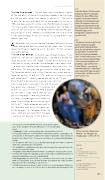
Christ and the Samaritan Woman, by Philippe de Champaigne (1602-1674)
CHAPTER 3
x. [3:31] 8:23.
y. [3:32] 3:11.
z. [3:33–34] 8:26; 12:44–50; 1 Jn 5:10. a. [3:35] 13:3; Mt 11:27; 28:18; Lk 10:22. b. [3:36] 3:16; 1 Jn 5:13.
CHAPTER 4
a. [4:5] Gn 33:18–19; 48:22; Jos 24:32. b. [4:9] Sir 50:25–26; Mt 10:5.
c. [4:10] Sir 24:20–21; Is 55:1; Jer 2:13. d. [4:12] 8:53; Mt 12:41.
193


