


Page 213 - Demo
P. 213
JOHN -
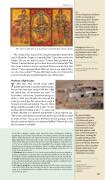
The Twelve Apostles in a medieval work from Barcelona, Spain
66As a result of this, many [of ] his disciples returned to their former way of life and no longer accompanied him. 67Jesus then said to the Twelve, “Do you also want to leave?” 68Simon Peter answered him, “Master, to whom shall we go? You have the words of eternal life. 69We have come to believe and are convinced that you are the Holy One of God.”d 70Jesus answered them, “Did I not choose you twelve? Yet is not one of you a devil?” 71He was referring to Judas, son of Simon the Iscariot; it was he who would betray him, one of the Twelve.e
7The Feast of Tabernacles.
1* After this, Jesus moved about within Galilee; but he did not wish to travel in Judea,
because the Jews were trying to kill him.a 2But
the Jewish feast of Tabernacles was near.b 3So
his brothers* said to him, “Leave here and go to
Judea, so that your disciples also may see the
works you are doing. 4No one works in secret if
he wants to be known publicly. If you do these
things, manifest yourself to the world.”c 5For his
brothers did not believe in him. 6* So Jesus said
to them, “My time is not yet here, but the time is always right for you. 7The world cannot hate you, but it hates me, because I testify to it that its works are evil.d 8You go up to the feast. I am not going up* to this feast, because my time has not yet been ful lled.” 9After he had said this, he stayed on in Galilee.
6:66
The teaching about the Bread of Life is a turning point: many among Jesus’ disciples cannot accept it, and go
back “to their former way of life.” Peter and the others do not claim to understand this mystery, but they do know that only Jesus has “words of eternal life” (6:68).
Belonging to Jesus is a mystery. It is not a choice that we make but a choice that God makes. To follow Jesus is itself a gift from God.
CHAPTER 6
d. [6:69] 11:27; Mt 16:16; Mk 1:24; Lk 4:34. e. [6:71] 12:4; 13:2, 27.
7:2
The feast of Sukkot, celebrated in September
or October each year, is
also known as the feast of “tabernacles” or “booths” because people would
take their meals in small
huts covered with palms or other leaves, recalling the movable dwellings of the Israelites during their forty years in the desert. Before the destruction of the Jerusalem Temple, Sukkot was one of the pilgrimage holidays, celebrated in Jerusalem.
CHAPTER 7
a. [7:1] 5:18; 8:37, 40.
b. [7:2] Ex 23:16; Lv 23:34; Nm 29:12;
Dt 16:13–16; Zec 14:16–19. c. [7:4] 14:22.
d. [7:7] 15:18.
201
* [7:1-8] These chapters contain events about the feast of Tabernacles (Sukkoth, Ingathering: Ex 23:16; Tents, Booths: Dt 16:13–16), with its symbols of booths (originally built to shelter harvesters), rain (water from Siloam poured on the temple altar), and lights (illumination of the four torches in the Court of the Women). They continue the theme of the replacement of feasts (Passover, Jn 2:13; 6:4; Hanukkah, Jn 10:22; Pentecost, Jn 5:1), here accomplished by Jesus as the Living Water. These chapters comprise seven miscellaneous controversies and dialogues. There is a literary inclusion with Jesus in hiding in Jn 7:4, 10; 8:59. There are frequent references to attempts on his life: Jn 7:1, 13, 19, 25, 30, 32, 44; 8:37, 40, 59.
* [7:3] Brothers: these relatives (cf. Jn 2:12 and see note on Mk 6:3) are never portrayed as disciples until after the resurrection (Acts 1:14). Mt 13:55 and Mk 6:3 give the names of four of them. Jesus has already performed works/signs in Judea; cf. Jn 2:23; 3:2; 4:45; 5:8.
* [7:6] Time: the Greek word means “opportune time,” here a synonym for Jesus’“hour” (see note on Jn 2:4), his death and resurrection. In the wordplay, any time is suitable for Jesus’ brothers, because they are not dependent on God’s will.
* [7:8] I am not going up: an early attested reading “not yet” seems a correction, since Jesus in the story does go up to the feast. “Go up,” in a play on words, refers not only to going up to Jerusalem but also to exaltation at the cross, resurrection, and ascension; cf. Jn 3:14; 6:62; 20:17.


