


Page 215 - Demo
P. 215
JOHN
34You will look for me but not nd [me], and where I am you cannot come.”t 35So the Jews said to one another, “Where is he going that we will not nd him? Surely he is not going to the dispersion* among the Greeks to teach the Greeks, is he? 36What is the meaning of his saying, ‘You will look for me and not nd [me], and where I am you cannot come’?”
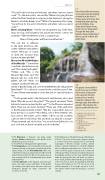
Rivers of Living Water.* 37On the last and greatest day of the feast, Jesus stood up and exclaimed, “Let anyone who thirsts come to me and drink.u 38Whoever believes in me, as scripture says:
‘Rivers of living water* will ow from within him.’”v
39He said this in reference
to the Spirit that those who
came to believe in him were to
receive. There was, of course,
no Spirit yet,* because Jesus
had not yet been glori ed.w
Discussion About the Origins
of the Messiah.* 40Some in the
crowd who heard these words
said, “This is truly the Prophet.”x
41Others said, “This is the
Messiah.” But others said, “The
Messiah will not come from
Galilee, will he? 42Does not
scripture say that the Messiah
will be of David’s family and come from Bethlehem, the village where David lived?”y 43So a division occurred in the crowd because of him. 44Some of them even wanted to arrest him, but no one laid hands on him.
45So the guards went to the chief priests and Pharisees, who asked them, “Why did you not bring him?” 46The guards answered, “Never before has anyone spoken like this one.” 47So the Pharisees answered them, “Have you also been deceived? 48Have any of the authorities or the Pharisees believed in him?z 49But this crowd, which does not know the law, is accursed.” 50Nicodemus, one of their members who had come to him earlier, said to them,a 51“Does our law condemn a person before it rst hears him and nds out what he is doing?”b 52They answered and said to him, “You are not from Galilee also, are you? Look and see that no prophet arises from Galilee.”
7:37
Part of the Sukkot observance in Jerusalem was the drawing of water from the Pool of Siloam, water which was then carried with great rejoicing up to the Temple. Jesus invites all to believe in him, and to receive “living water.” Through the Holy Spirit, believers have a wellspring of life not outside of them, but within them.
7:46
The guards seem unable to arrest Jesus, not out of fear but because of the power
of his word. Do I feel the power of Jesus’ word as
I read the Scriptures? Are there passages that make me exclaim, “Never before has anyone spoken like this one”?
t. [7:34] 8:21; 12:36; 13:33, 36; 16:5; Dt 4:29; Prv 1:28; Is 55:6; Hos 5:6.
u. [7:37] Rev 21:6.
v. [7:38] 4:10, 14; 19:34; Is 12:3; Ez 47:1.
w. [7:39] 16:7.
x. [7:40] Dt 18:15, 18.
y. [7:42] 2 Sm 7:12–14; Ps 89:3–4;
132:11; Mi 5:1; Mt 2:5–6.
z. [7:48] 12:42.
a. [7:50] 3:1; 19:39.
b. [7:51] Dt 1:16–17.
* [7:35] Dispersion: or “diaspora”: Jews living outside Palestine. Greeks: probably refers to the Gentiles in the Mediterranean area; cf. Jn 12:20.
* [7:37, 39] Promise of living water through the Spirit.
* [7:38] Living water: not an exact quotation from any Old Testament passage; in the gospel context the gift of the Spirit is meant; cf. Jn 3:5. From within him: either Jesus or the believer; if Jesus, it continues the Jesus-Moses motif (water from the rock, Ex 17:6; Nm 20:11) as well as Jesus as the new temple (cf. Ez 47:1). Grammatically, it goes better
with the believer.
* [7:39] No Spirit yet: Codex Vaticanus and early Latin,
Syriac, and Coptic versions add “given.” In this gospel, the sending of the Spirit cannot take place until Jesus’ glori cation through his death, resurrection, and ascension; cf. Jn 20:22.
* [7:40–53] Discussion of the Davidic lineage of the Messiah. * [7:53–8:11] The story of the woman caught in adultery is a later insertion here, missing from all early Greek manuscripts. A Western text-type insertion, attested mainly in Old Latin translations, it is found in di erent places in di erent manuscripts: here, or after Jn 7:36 or at the end of this gospel, or after Lk 21:38, or at the end of that gospel. There are many non-Johannine features in the language, and there are also many doubtful readings within the passage. The style and motifs are similar to those of Luke, and it ts better with the general situation at the end of Lk 21, but it was probably inserted here because of the allusion to Jer 17:13 (cf. note on Jn 8:6) and the statement, “I do not judge anyone,” in Jn 8:15. The Catholic Church accepts this passage as canonical
scripture.
203


