


Page 256 - Demo
P. 256
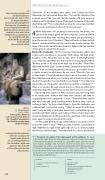
3:22 Peter cites key passages from the Old Testament to demonstrate who Jesus is. Here, he quotes from Moses’ instructions about prophets in Deuteronomy 18, when Moses assures the people that after his death God will continue to send prophets in their midst. Peter interprets this as a prophecy of the coming Messiah, who will be like Moses, teaching the people with the very words of God.
Moses, by Michelangelo (1475-1564). Peter quotes Moses in order to prove that Jesus is the “prophet” promised to the Israelite people many centuries before.
4:1 Confronted by the Sadducees, taken into custody by the temple guard, placed in prison, interrogated before the Sanhedrin—again and again, we will see the life of Jesus re ected in the lives of his followers.
244
THE ACTS OF THE APOSTLES -
24Moreover, all the prophets who spoke, from Samuel and those afterwards, also announced these days. 25You are the children of the prophets and of the covenant that God made with your ancestors when he said to Abraham, ‘In your o spring all the families of the earth shall be blessed.’n 26For you rst, God raised up his servant and sent him to bless you by turning each of you from your evil ways.”o
41While they were still speaking to the people, the priests, the *
captainofthetempleguard,andtheSadducees confrontedthem, 2disturbed that they were teaching the people and proclaiming in Jesus the resurrection of the dead.a 3They laid hands on them and put them in custody until the next day, since it was already evening. 4But many of those who heard the word came to believe and [the] number of men grew to [about] ve thousand.
Before the Sanhedrin. 5On the next day, their leaders, elders, and scribes were assembled in Jerusalem, 6with Annas the high priest, Caiaphas, John, Alexander, and all who were of the high-priestly class. 7They brought them into their presence and questioned them, “By what power or by what name have you done this?” 8Then Peter, lled with the holy Spirit, answered them, “Leaders of the people and elders:b 9If we are being examined today about a good deed done to a cripple, namely, by what means he was saved, 10then all of you and all the people of Israel should know that it was in the name of Jesus Christ the Nazorean whom you cruci ed, whom God raised from the dead; in his name this man stands before you healed. 11c He is ‘the stone rejected by you,* the builders, which has become the cornerstone.’ 12* d There is no salvation through anyone else, nor is there any other name under heaven given to the human race by which we are to be saved.”
13Observing the boldness of Peter and John and perceiving them to be uneducated, ordinary men, they were amazed, and they re- cognized them as the companions of Jesus. 14Then when they saw the man who had been cured standing there with them, they could say nothing in reply. 15So they ordered them to leave the Sanhedrin, and conferred with one another, saying, 16“What are we to do with these men? Everyone living in Jerusalem knows that a remarkable sign was done through them, and we cannot deny it. 17But so that it may not be spread any further among the people, let us give them a stern warning never again to speak to anyone in this name.”e
18So they called them back and ordered them not to speak or teach at all in the name of Jesus. 19Peter and John, however, said to them in reply, “Whether it is right in the sight of God for us to obey you rather than God, you be the judges.f 20It is impossible for us not to speak about
*[4:1] The priests, the captain of the temple guard, and the Sadducees: the priests performed the temple liturgy; the temple guard was composed of Levites, whose captain ranked next after the high priest. The Sadducees, a party within Judaism at this time, rejected those doctrines, including bodily resurrection, which they believed alien to the ancient Mosaic religion. The Sadducees were drawn from priestly families and from the lay aristocracy.
* [4:11] Early Christianity applied this citation from Ps 118:22 to Jesus; cf. Mk 12:10; 1 Pt 2:7.
* [4:12] In the Roman world of Luke’s day, salvation was often attributed to the emperor who was hailed as “savior” and “god.” Luke, in the words of Peter, denies that deliverance comes
through anyone other than Jesus.
CHAPTER 3
n. [3:25] Gn 12:3; 18:18; 22:18; Sir 44:19–21; Gal 3:8–9.
o. [3:26] 13:46; Rom 1:16.
CHATER 4
a. [4:2] 23:6–8; 24:21.
b. [4:8] Mt 10:20.
c. [4:11] Ps 118:22; Is 28:16; Mt 21:42; Mk 12:10;
Lk 20:17; Rom 9:33; 1 Pt 2:7. d. [4:12] Mt 1:21; 1 Cor 3:11.
e. [4:17] 5:28.
f. [4:19] 5:29–32.


