


Page 258 - Demo
P. 258
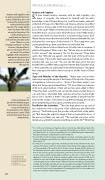
5:1 Ananias and Sapphira seem to want to emulate the heroic action of Barnabas, who sold his property and placed the money at the feet of the apostles. This couple did the same, but kept some of the money for themselves. The community imposes no punishment on them, but both of them die within a few hours. Their sin is not in keeping some back—as Peter observes, they were free to give, or not to give. Their sin was deceit. The incident highlights that transparency and generosity are not just options for Christians; they are essential aspects of the Christian life.
246
5:19 Imprisoned again, the apostles are freed by angels. Upon their escape, they do not go into hiding, but instead return to the Temple and continue to teach. Filled with the Holy Spirit, they are utterly fearless.
a. [5:3] Lk 22:3; Jn 13:2.
b. [5:11] 2:43; 5:5; 19:17.
c. [5:12] 2:43; 6:8; 14:3; 15:12.
d. [5:15] 19:11–12; Mk 6:56.
e. [5:17] 4:1–3, 6.
f. [5:19] 12:7–10; 16:25–26.
THE ACTS OF THE APOSTLES
5Ananias and Sapphira.*
1A man named Ananias, however, with his wife Sapphira, sold
a piece of property. He retained for himself, with his wife’s knowledge, some of the purchase price, took the remainder, and put it at the feet of the apostles. 3But Peter said, “Ananias, why has Satan lled your heart so that you lied to the holy Spirit and retained part of the price of the land?a 4While it remained unsold, did it not remain yours? And when it was sold, was it not still under your control? Why did you contrive this deed? You have lied not to human beings, but to God.” 5When Ananias heard these words, he fell down and breathed his last, and great fear came upon all who heard of it. 6The young men came and wrapped him up, then carried him out and buried him.
7After an interval of about three hours, his wife came in, unaware of what had happened. 8Peter said to her, “Tell me, did you sell the land for this amount?” She answered, “Yes, for that amount.” 9Then Peter said to her, “Why did you agree to test the Spirit of the Lord? Listen, the footsteps of those who have buried your husband are at the door, and they will carry you out.” 10At once, she fell down at his feet and breathed her last. When the young men entered they found her dead, so they carried her out and buried her beside her husband. 11And great fear came upon the whole church and upon all who heard of these things.b
Signs and Wonders of the Apostles.* 12Many signs and wonders were done among the people at the hands of the apostles. They were all together in Solomon’s portico.c 13None of the others dared to join them, but the people esteemed them. 14Yet more than ever, believers in the Lord, great numbers of men and women, were added to them. 15Thus they even carried the sick out into the streets and laid them on cots and mats so that when Peter came by, at least his shadow might fall on one or another of them.d 16A large number of people from the towns in the vicinity of Jerusalem also gathered, bringing the sick and those disturbed by unclean spirits, and they were all cured.
Trial Before the Sanhedrin.* 17Then the high priest rose up and all his companions, that is, the party of the Sadducees, and, lled with jealousy,e 18laid hands upon the apostles and put them in the public jail. 19But during the night, the angel of the Lord opened the doors of the prison, led them out, and said,f 20“Go and take your place in the temple area, and tell the people everything about this life.”21When they
2
* [5:1–11] The sin of Ananias and Sapphira did not consist in the withholding of part of the money but in their deception of the community. Their deaths are ascribed to a lie to the holy Spirit (Acts 5:3, 9), i.e., they accepted the honor accorded them by the community for their generosity, but in reality they were not deserving of it.
* [5:12–16] This, the third summary portraying the Jerusalem community, underscores the Twelve as its bulwark, especially because of their charismatic power to heal the sick; cf. Acts 2:42–47; 4:32–37.
* [5:17–42] A second action against the community is taken by the Sanhedrin in the arrest and trial of the Twelve; cf. Acts 4:1–3. The motive is the jealousy of the religious authorities over the popularity of the apostles (Acts 5:17) who are now charged with the de ance of the Sanhedrin’s previous order to them to abandon their prophetic role (Acts 5:28; cf. Acts 4:18). In this crisis the apostles are favored by a miraculous release from prison (Acts 5:18– 24). (For similar incidents involving Peter and Paul, see Acts 12:6–11; 16:25–29.) The real signi cance of such an event, however, would be manifest only to people of faith, not to unbelievers; since the Sanhedrin already judged the Twelve to be inauthentic prophets, it could disregard reports of their miracles. When the Twelve immediately resumed public teaching, the Sanhedrin determined to invoke upon them the penalty of death (Acts 5:33) prescribed in Dt 13:6–10. Gamaliel’s advice against this course nally prevailed, but it did not save the Twelve from the punishment of scourging (Acts 5:40) in a last endeavor to shake their conviction of their prophetic mission.


