


Page 259 - Demo
P. 259
THE ACTS OF THE APOSTLES
heard this, they went to the temple early in the morning and taught. When the high priest and his companions arrived, they convened the Sanhedrin, the full senate of the Israelites, and sent to the jail to have them brought in. 22But the court o cers who went did not nd them in the prison, so they came back and reported, 23“We found the jail securely locked and the guards stationed outside the doors, but when we opened them, we found no one inside.” 24When they heard this report, the captain of the temple guard and the chief priests were at a loss about them, as to what this would come to. 25Then someone came in and reported to them, “The men whom you put in prison are in the temple area and are teaching the people.” 26Then the captain and the court o cers went and brought them in, but without force, because they were afraid of being stoned by the people.g
27When they had brought them in and made them stand before the Sanhedrin, the high priest questioned them, 28“We gave you strict orders [did we not?] to stop teaching in that name. Yet you have lled Jerusalem with your teaching and want to bring this man’s blood upon us.”h 29But Peter and the apostles said in reply, “We must obey God rather than men.i 30* The God of our ancestors raised Jesus,j though you had him killed by hanging him on a tree. 31God exalted him at his right hand* as leader and savior to grant Israel repentance and forgiveness of sins.k 32We are witnesses of these things, as is the holy Spirit that God has given to those who obey him.”l
33When they heard this, they became infuriated and wanted to put them to death. 34* But a Pharisee in the Sanhedrin named Gamaliel, a teacher of the law, respected by all the people, stood up, ordered the men to be put outside for a short time,m 35and said to them, “Fellow Israelites, be careful what you are about to do to these men. 36* Some time ago, Theudas appeared, claiming to be someone important, and about four hundred men joined him, but he was killed, and all those who were loyal to him were disbanded and came to nothing. 37After him came Judas the Galilean at the time of the census. He also drew people after him, but he too perished and all who were loyal to him were scattered. 38So now I tell you, have nothing to do with these men, and let them go. For if this endeavor or this activity is of human origin, it will destroy itself. 39But if it comes from God, you will not be able to destroy them; you may even nd yourselves ghting against God.” They were persuaded by him. 40After recalling the apostles, they had them ogged, ordered them to stop speaking in the name of Jesus, and dismissed them.n 41So they left the presence of the Sanhedrin, rejoicing that they had been found worthy to su er dishonor for the sake of the name.o 42And all day long, both at the temple and in their homes, they did not stop teaching and proclaiming the Messiah, Jesus.p
5:34
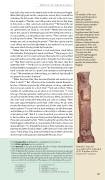
The members of the court want to put the apostles to death, but Gamaliel intervenes with extraordinary wisdom. He gives examples of movements led by charismatic leaders, forgotten names like Theudas and Judas the Galilean. These men gained a following, but when they died, their followers scattered. Gamaliel urges patience. If this new movement is human, it will die out on its own. But if not, “You may even nd yourselves ghting against God” (5:38). Gamaliel’s wisdom prevails, and the apostles are released with a ogging.
Gamaliel, depicted
on a pillar of the Cathedral of St. Trophime in Arles, France (13th century)
247
* [5:30] Hanging him on a tree: that is, crucifying him (cf. also Gal 3:13).
* [5:31] At his right hand: see note on Acts 2:33.
* [5:34] Gamaliel: in Acts 22:3, Paul identi es himself as a disciple of this Rabbi Gamaliel
I who ourished in Jerusalem between A.D. 25 and 50.
* [5:36–37] Gamaliel o ers examples of unsuccessful contemporary movements to argue that
if God is not the origin of this movement preached by the apostles it will perish by itself. The movement initiated by Theudas actually occurred when C. Cuspius Fadus was governor, A.D. 44–46. Luke’s placing of Judas the Galilean after Theudas and at the time of the census (see note on Lk 2:1–2) is an indication of the vagueness of his knowledge of these events.
g. [5:26] Lk 20:19. h. [5:28] Mt 27:25. i. [5:29] 4:19.
j. [5:30] 2:23–24. k. [5:31] 2:38.
l. [5:32] Lk 24:48; Jn 15:26.
m. [5:34] 22:3.
n. [5:40] Mt 10:17; Acts 4:17–18.
o. [5:41] Mt 5:10–11; 1 Pt 4:13.
p. [5:42] 2:46; 5:20–21, 25; 8:35; 17:3; 18:5, 28; 19:4–5.


