


Page 362 - Demo
P. 362
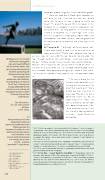
“All things to all”: It is not that Paul has one message for Jews, and a quite di erent one for Gentiles. Rather, Paul gets to know the community where he is preaching the Gospel and to understand their strengths, their weaknesses, their traditions. His preaching is not “one size ts all,” but is carefully and lovingly addressed to each community so as to bring the message of salvation to them in the way they will best understand it.
The Harvesters, by Ivan Jakovlevitch Bilibine (1876-1942)
9:24 Because the city of Corinth played host to biennial games, not unlike the ancient Olympic games, this metaphor of runners in a race would not have been lost on the Corinthians. In the ancient world, the prize was not a medal, but a crown of fresh—and thus “perishable”—laurel leaves.
i. [9:14] Mt 10:10; Lk 10:7–8.
j. [9:15] 2 Cor 11:9–10.
k. [9:16] Acts 26:14–18.
l. [9:17] 4:1; Gal 2:7.
m. [9:18] 2 Cor 11:7–12.
n. [9:19] Mt 20:26–27.
o. [9:22] 10:33; Rom 15:1; 2 Cor 11:29.
p. [9:24] Heb 12:1.
q. [9:25] 2 Tm 2:5 / 2 Tm 4:7–8;
Jas 1:12; 1 Pt 5:4.
350
* [9:15–18] Paul now assigns a more personal motive to his nonuse of his right to support. His preaching is not a service spontaneously undertaken on his part but a stewardship imposed by a sort of divine compulsion. Yet to merit any reward he must bring some spontaneous quality to his service, and this he does by freely renouncing his right to support. The material here is quite similar to that contained in Paul’s “defense” at 2 Cor 11:5–12; 12:11–18.
* [9:19–23] In a rhetorically balanced series of statements Paul expands and generalizes the picture of his behavior and explores the paradox of apostolic freedom. It is not essentially freedom from restraint but freedom for service—a possibility of constructive activity.
* [9:24–27] A series of miniparables from sports, appealing to readers familiar with Greek gymnasia and the nearby Isthmian games.
* [9:27] For fear that. . . I myself should be disquali ed: a nal paradoxical turn to the argument: what appears at rst a free, spontaneous renunciation of rights (1 Cor 9:12– 18) seems subsequently to be required for ful llment of Paul’s stewardship (to preach e ectively he must reach his hearers wherever they are, 1 Cor 9:19–22), and nally is seen to be necessary for his own salvation (1 Cor 9:23–27). Mention of the possibility of disquali cation provides a transition to 1 Cor 10.
CORINTHIANS
those who preach the gospel should live by the gospel.i 15* I have not used any of these rights, however, nor do I write this that it be done so in my case. I would rather die. Certainly no one is going to nullify my boast.j 16If I preach the gospel, this is no reason for me to boast, for an obligation has been imposed on me, and woe to me if I do not preach it!k 17If I do so willingly, I have a recompense, but if unwillingly, then I have been entrusted with a stewardship.l 18What then is my recompense? That, when I preach, I o er the gospel free of charge so as not to make full use of my right in the
gospel.m
All Things to All. 19* Although I am free in regard to all, I have made myself a slave to all so as to win over as many as possible.n 20To the Jews I became like a Jew to
win over Jews; to those under the law I became like one under the law—though I myself am not under the law—to win over those under the law. 21To those outside the law I became like one outside the law— though I am not outside God’s law but within the law of Christ—to win over those outside the law. 22To the weak I became weak, to win over the weak. I have become all things to all, to save at least some.o 23All this I do for the sake of the gospel, so that I too may have a share in it.
24* Do you not know that the runners in the stadium all run in the race, but only one wins the prize? Run so as to win.p 25Every athlete exercises discipline in every way. They do it to win a perishable crown, but we an imperishable one.q 26Thus I do not run aimlessly; I do not ght as if I were shadowboxing. 27No, I drive my body and train it, for fear that, after having preached to others, I myself should be disquali ed.*


