


Page 364 - Demo
P. 364
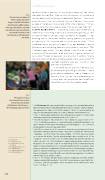
10:23 Since we are members of Christ’s body, we are no longer isolated individuals. Our decisions a ect others. Paul says we need to consider not only our own consciences, but those of others in the community, in the decisions we make.
10:31 The Society of Jesus (the Jesuits) have as their motto the Latin phrase Ad Majorem Dei Gloriam— ”for the greater glory of God.”
352
o. [10:20] Dt 32:17.
p. [10:21] 2 Cor 6:14–18.
q. [10:22] Dt 32:21 / Eccl 6:10.
r. [10:23] 6:12.
s. [10:24] Rom 15:2; Phil 2:4, 21.
t. [10:26] Ps 24:1; 50:12.
u. [10:30] Rom 14:6; 1 Tm 4:3–4.
v. [10:33] 9:22; Rom 15:2.
CORINTHIANS
sacri ced to idols is anything? Or that an idol is anything? 20No, I mean that what they sacri ce, [they sacri ce] to demons,* not to God, and I do not want you to become participants with demons.o 21You cannot drink the cup of the Lord and also the cup of demons. You cannot partake of the table of the Lord and of the table of demons.p 22Or are we provoking the Lord to jealous anger? Are we stronger than he?q Seek the Good of Others.* 23“Everything is lawful,” but not everything isbene cial.*“Everythingislawful,”butnoteverythingbuildsup.r 24No one should seek his own advantage, but that of his neighbor.s 25* Eat anything sold in the market, without raising questions on grounds of conscience, 26for “the earth and its fullness are the Lord’s.”t 27If an unbeliever invites you and you want to go, eat whatever is placed before you, without raising questions on grounds of conscience. 28But if someone says to you, “This was o ered in sacri ce,” do not eat it on account of the one who called attention to it and on account of conscience; 29I mean not your own conscience, but the other’s. For why should my freedom be determined by someone else’s conscience? 30If
I partake thankfully, why am I reviled for that over which I give thanks?u
31So whether you eat or drink, or whatever you do, do everything for the glory of God. 32* Avoid giving o ense, whether to Jews or Greeks or the church of God, 33just as I try to please everyone in every way, not seeking my own bene t but that of the many, that they may be saved.v
* [10:20] To demons: although Jews denied divinity to pagan gods, they often believed that there was some nondivine reality behind the idols, such as the dead, or angels, or demons. The explanation Paul o ers in 1 Cor 10:20 is drawn from Dt 32:17: the power behind the idols, with which the pagans commune, consists of demonic powers hostile to God.
* [10:23–11:1] By way of peroration Paul returns to the opening situation (1 Cor 8) and draws conclusions based on the intervening considerations (1 Cor 9–10).
* [10:23–24] He repeats in the context of this new problem the slogans of liberty from 1 Cor 6:12, with similar quali cations. Liberty is not merely an individual perfection, nor an end in itself, but is to be used for the common good. The language of 1 Cor 10:24 recalls the descriptions of Jesus’ self-emptying in Phil 2.
* [10:25–30] A summary of speci c situations in which the eating of meat sacri ced to idols could present problems of conscience. Three cases are considered. In the rst (the marketplace, 1 Cor 10:25–26) and the second (at table, 1 Cor 10:27), there is no need to be concerned with whether food has passed through a pagan sacri ce or not, for the principle of 1 Cor 8:4–6 still stands, and the whole creation belongs to the one God. But in the third case (1 Cor 10:28), the situation changes if someone present explicitly raises the question of the sacri cial origin of the food; eating in such circumstances may be subject to various interpretations, some of which could be harmful to individuals. Paul is at pains to insist that the enlightened Christian conscience need not change its judgment about the neutrality, even the goodness, of the food in itself (1 Cor 10:29–30); yet the total situation is altered to the extent that others are potentially endangered, and this calls for a di erent response, for the sake of others.
* [10:32–11:1] In summary, the general rule of mutually responsible use of their Christian freedom is enjoined rst negatively (1 Cor 10:32), then positively, as exempli ed in Paul (1 Cor 10:33), and nally grounded in Christ, the pattern for Paul’s behavior and theirs (1 Cor 11:1; cf. Rom 15:1–3).


