


Page 363 - Demo
P. 363
10:1
Paul parallels the Exodus story with the Christian mystery. Moses led the people of Israel out of Egypt through the water of the Red Sea. They fed upon manna in the desert and quenched their thirst with water from the rock. Christians have passed through the water of baptism and now share in the food and drink of the Eucharist as we journey toward the land of God’s promise. But we
are not immune: the same temptations that a icted Israel in the desert can a ict us. Will we bear up under the trials that come our way with God’s help—or test God?
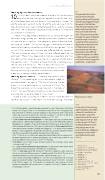
Mountains of Sinai
10:16
In the midst of his warning against idolatry, Paul o ers a beautiful meditation on the Eucharist. To eat the bread and drink the cup is to become part of Christ. And to become part of Christ is to belong wholly to Christ, whose body we are. We cannot divide our allegiance by eating at other tables— worshipping other gods (10:21).
a. [10:1] Ex 13:21–22;
14:19–20 / Ex 14:21–22, 26–30.
b. [10:2] Rom 6:3; Gal 3:27 / Ex 16:4–35.
c. [10:4] Ex 17:1–7; Nm 20:7–11; Dt 8:15.
d. [10:5] Nm 14:28–38; Jude 5.
e. [10:6] Nm 11:4, 34.
f. [10:7] Ex 32:6.
g. [10:8] Nm 25:1–9.
h. [10:9] Nm 21:5–9.
i. [10:10] Nm 14:2–37; 16:1–35.
j. [10:13] Mt 6:13; Jas 1:13–14 / 1 Cor 1:9.
k. [10:14] 1 Jn 5:21.
l. [10:16] Mt 26:26–29; Acts 2:42.
m. [10:17] Rom 12:5; Eph 4:4.
n. [10:18] Lv 7:6.
351
* [10:1–5] Paul embarks unexpectedly upon a panoramic survey of the events of the Exodus period. The privileges of Israel in the wilderness are described in terms that apply strictly only to the realities of the new covenant (“baptism,”“spiritual food and drink”); interpreted in this way they point forward to the Christian experience (1 Cor 10:1–4). But those privileges did not guarantee God’s permanent pleasure (1 Cor 10:5).
* [10:4] A spiritual rock that followed them: the Torah speaks only about a rock from which water issued, but rabbinic legend ampli ed this into a spring that followed the Israelites throughout their migration. Paul uses this legend as a literary type: he makes the rock itself accompany the Israelites, and he gives it a spiritual sense. The rock was the Christ: in the Old Testament, Yahweh is the Rock of his people (cf. Dt 32, Moses’ song to Yahweh the Rock). Paul now applies this image to the Christ, the source of the living water, the true Rock that accompanied Israel, guiding their experiences in the desert.
* [10:6–13] This section explicitates the typological value of these Old Testament events: the desert experiences of the Israelites are examples, meant as warnings, to deter us from similar sins (idolatry, immorality, etc.) and from a similar fate.
* [10:9] Christ: to avoid Paul’s concept of Christ present in the wilderness events, some manuscripts read “the Lord.”
* [10:11] Upon whom the end of the ages has come: it is our period in time toward which past ages have been moving and in which they arrive at their goal.
* [10:12–13] Take care not to fall: the point of the whole comparison with Israel is to caution against overcon dence, a sense of complete security (1 Cor 10:12). This warning is immediately balanced by a reassurance, based, however, on God (1 Cor 10:13).
* [10:14–22] The warning against idolatry from 1 Cor 10:7 is now repeated (1 Cor 10:14) and explained in terms of the e ect of sacri ces: all sacri ces, Christian (1 Cor 10:16–17), Jewish (1 Cor 10:18), or pagan (1 Cor 10:20), establish communion. But communion with Christ is exclusive, incompatible with any other such communion (1 Cor 10:21). Compare the line of reasoning at 1 Cor 6:15.
CORINTHIANS
Warning Against Overcon dence.
10
all of them were baptized into Moses in the cloud and in the sea.b 3All ate the same spiritual food, 4and all drank the same spiritual drink, for they drank from a spiritual rock that followed them,* and the rock was the Christ.c 5Yet God was not pleased with most of them, for they were struck down in the desert.d
6* These things happened as examples for us, so that we might not desire evil things, as they did.e 7And do not become idolaters, as some of them did, as it is written, “The people sat down to eat and drink, and rose up to revel.”f 8Let us not indulge in immorality as some of them did, and twenty-three thousand fell within a single day.g 9Let us not test Christ* as some of them did, and su ered death by serpents.h 10Do not grumble as some of them did, and su ered death by the destroyer.i 11These things happened to them as an example, and they have been written down as a warning to us, upon whom the end of the ages has come.* 12Therefore, whoever thinks he is standing secure should take care not to fall.* 13No trial has come to you but
what is human. God is faithful and will not let you be tried beyond your strength; but with the trial he will also provide a way out, so that you may be able to bear it.j
Warning Against Idolatry.* 14Therefore, my beloved, avoid idolatry.k 15I am speaking as to sensible people; judge for yourselves what I am saying. 16The cup of blessing that we bless, is it not a participation in the blood of Christ? The bread that we break, is it not a participation in the body of Christ?l 17Because the loaf of bread is one, we, though many, are one body, for we all partake of the one loaf.m
18Look at Israel according to the esh; are not those who eat the sacri ces participants in the altar?n 19So what am I saying? That meat
1* I do not want you to be unaware, brothers, that our ancestors
a2 were all under the cloud and all passed through the sea, and


