


Page 398 - Demo
P. 398
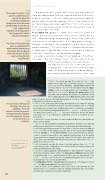
11:16 Paul speaks “as a fool”—and gives his credentials as an apostle. He wants the Corinthians to know his background, but at the same time he makes it clear that all such credentials are irrelevant, since the power of the true apostle is not his own, but God’s power.
11:23 The litany of Paul’s su erings gives us a glimpse of his whole-hearted dedication to the Gospel. Only an apostle on re with the love of Christ could continue this life, day after day.
CORINTHIANS
12And what I do I will continue to do, in order to end this pretext of those who seek a pretext for being regarded as we are in the mission of which they boast. 13* For such people are false apostles, deceitful workers, who masquerade as apostles of Christ. 14And no wonder, for even Satan masquerades as an angel of light. 15So it is not strange that his ministers also masquerade as ministers of righteousness. Their end will correspond to their deeds.
Paul’s Boast: His Labors. 16* I repeat, no one should consider me foolish;* but if you do, accept me as a fool, so that I too may boast a little.* 17What I am saying I am not saying according to the Lord but as in foolishness, in this boastful state. 18Since many boast according to the esh, I too will boast. 19For you gladly put up with fools, since you are wise yourselves. 20* For you put up with it if someone enslaves you, or devours you, or gets the better of you, or puts on airs, or slaps you in the face. 21To my shame I say that we were too weak!*
But what anyone dares to boast of (I am speaking in foolishness) I also dare. 22* Are they Hebrews? So am I. Are they Israelites? So am I. Are they descendants of Abraham? So am I.k 23* Are they ministers of Christ? (I am talking like an insane person.)l I am still more,* with far greater labors, far more imprisonments, far worse beatings, and numerous brushes with death. 24Five times
11:30 “If I must boast, I will boast of the things that show my weakness.” This is the summary of Paul’s argument: he boasts not of his strength, but of his weakness, because Christ comes to us in weakness.
k. [11:22] Acts 22:3 / Rom 11:1; Phil 3:5–6.
l. [11:23] 6:5; Acts 16:22–24; 1 Cor 15:31–32.
386
* [11:13–15] Paul picks up again the imagery of 2 Cor 11:3 and applies it to the opponents: they are false apostles of Christ, really serving another master. Deceitful. . .masquerade: deception and simulation, like cunning (2 Cor 11:3), are marks of the satanic. Angel of light: recalls the contrast between light and darkness, Christ and Beliar at 2 Cor 6:14–15. Ministers of righteousness: recalls the earlier contrast between the ministry of condemnation and that of righteousness (2 Cor 3:9). Their end: the section closes with
another allusion to the judgment, when all participants in the nal con ict will be revealed or unmasked and dealt with as they deserve.
* [11:16–12:10] Paul now accepts the challenge of his opponents and indulges in boasting
similar to theirs, but with di erences that he has already signaled in 2 Cor 10:12–18 and that become clearer as he proceeds. He de nes the nature of his project and unmistakably labels it as folly at the beginning and the end (2 Cor 11:16–23; 12:11). Yet his boast does not spring from ignorance (2 Cor 11:21; 12:6) nor is it concerned merely with human distinctions (2 Cor 11:18). Paul boasts “in moderation” (2 Cor 10:13, 15) and “in the Lord” (2 Cor 10:17).
* [11:16–29] The rst part of Paul’s boast focuses on labors and a ictions, in which authentic service of Christ consists.
* [11:16–21] These verses recapitulate remarks already made about the foolishness of boasting and the excessive toleration of the Corinthians. They form a prelude to the boast proper.
* [11:20] Paul describes the activities of the “others” in terms that ll out the picture drawn in vv 3–4, 13–15. Much of the vocabulary suggests eshly or even satanic activity. Enslaves: cf. Gal 2:4. Devours: cf. 1 Pt 5:8. Gets the better: the verb lambanō means “to take,” but is used in a variety of senses; here it may imply nancial advantage, as in the English colloquialism “to take someone.” It is similarly used at 2 Cor 12:16 and is there connected with cunning and deceit. Puts on airs: the same verb is rendered“raise oneself”(2 Cor 10:5) and “be too elated” (2 Cor 12:7).
* [11:21] Paul ironically concedes the charge of personal weakness from 2 Cor 10:1–18 but will refute the other charge there mentioned, that of lack of boldness, accepting the challenge to demonstrate it by his boast.
* [11:22] The opponents apparently pride themselves on their “Jewishness.” Paul, too, can claim to be a Jew by race, religion, and promise. Descendants of Abraham: elsewhere Paul distinguishes authentic from inauthentic heirs of Abraham and the promise (Rom 4:13–18; 9:7–13; 11:1; Gal 3:9, 27–29; cf. Jn 8:33–47). Here he grants his opponents this title in order to concentrate on the principal claim that follows.
* [11:23a] Ministers of Christ. . .I am still more: the central point of the boast (cf. note on 2 Cor 11:5). Like an insane person: the climax of his folly.
* [11:23b–29] Service of the humiliated and cruci ed Christ is demonstrated by trials endured for him. This rhetorically impressive catalogue enumerates many of the labors and perils Paul encountered on his missionary journeys.


