


Page 399 - Demo
P. 399
CORINTHIANS -
at the hands of the Jews I received forty lashes minus one.m 25Three times I was beaten with rods, once I was stoned, three times I was shipwrecked, I passed a night and a day on the deep;n 26on frequent journeys, in dangers from rivers, dangers from robbers, dangers from my own race, dangers from Gentiles, dangers in the city, dangers in the wilderness, dangers at sea, dangers among false brothers; 27in toil and hardship, through many sleepless nights, through hunger and thirst, through frequent fastings, through cold and exposure.o 28And apart from these things, there is the daily pressure upon me of my anxiety for all the churches. 29Who is weak, and I am not weak? Who is led to sin, and I am not indignant?p
Paul’s Boast: His Weakness.* 30If I must boast, I will boast of the things that show my weakness. 31* The God and Father of the Lord Jesus knows, he who is blessed forever, that I do not lie. 32At Damascus, the governor under King Aretas guarded the city of Damascus, in order to seize me, 33but I was lowered in a basket through a window in the wall and escaped his hands.q
12
1I* must boast; not that it is pro table, but I will go on to visions
and revelations of the Lord. I know someone in Christ who, fourteen years ago (whether in the body or out of the body I do not know, God knows), was caught up to the third heaven. 3And I know that this person (whether in the body or out of the body I do not know, God knows) 4was caught up into Paradise and heard ine able things, which no one may utter.a 5About this person* I will boast, but about myself I will not boast, except about my weaknesses. 6Although if I should wish to boast, I would not be foolish, for I would be telling the truth. But I refrain, so that no one may think more of me than what he sees in me or hears from me 7because of the abundance of the
2
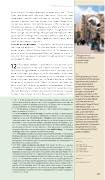
“Straight Street”
in Damascus (above) existed already
in Paul’s time.
12:2
Paul’s opponents in Corinth have boasted of their spiritual experiences. Paul speaks of his own extraordinary spiritual life in the third person—”I know someone”. But again, he ends with weakness, the “thorn in the esh” (12:7) which a icts him to keep him humble. We do not know what kind of su ering this “angel of Satan” in icted upon Paul—a chronic disability or physical pain, a spiritual trial or temptation, or perhaps even a person who opposes him? Paul prays for this su ering to leave him, but ultimately he gives thanks for it, because he recognizes that it is in just such su erings that Christ’s power is revealed.
CHAPTER 11
m. [11:24] Dt 25:2–3.
n. [11:25] Acts 14:19; 27:43–44.
o. [11:27] 1 Cor 4:11.
p. [11:29] 1 Cor 9:22.
q. [11:33] Acts 9:23–25.
CHAPTER 12
a. [12:4] Lk 23:43; Rev 2:7.
387
* [11:30–12:10] The second part of Paul’s boast, marked by a change of style and a shift in focus. After recalling the project in which he is engaged, he states a new topic: his weaknesses as matter for boasting. Everything in this section, even the discussion of privileges and distinctions, will be integrated into this perspective.
* [11:31–32] The episode at Damascus is symbolic. It aptly illustrates Paul’s weakness but ends in deliverance (cf. 2 Cor 4:7–11).
* [12:1–4] In the body or out of the body: he seemed no longer con ned to bodily conditions, but he does not claim to understand the mechanics of the experience. Caught up: i.e., in ecstasy. The third heaven. . .Paradise: ancient cosmologies depicted a multitiered universe. Jewish intertestamental literature contains much speculation about the number of heavens. Seven is the number usually mentioned, but the Testament of Levi (2:7–10; 3:1–4) speaks of three; God himself dwelt in the third of these. Without giving us any clear picture of the cosmos, Paul indicates a mental journey to a nonearthly space, set apart by God, in which secrets were revealed to him. Ine able things: i.e., privileged knowledge, which it was not possible or permitted to divulge.
* [12:5–7] This person: the indirect way of referring to himself has the e ect of emphasizing the distance between that experience and his everyday life, just as the indirect someone in Christ (2 Cor 12:2) and all the passive verbs emphasize his passivity and receptivity in the experience. The revelations were not a personal achievement, nor were they meant to draw attention to any quality of his own.
* [12:7] That I might not become too elated: God assures that there is a negative component to his experience, so that he cannot lose proper perspective; cf. 2 Cor 1:9; 4:7–11. A thorn in the esh: variously interpreted as a sickness or physical disability, a temptation, or a handicap connected with his apostolic activity. But since Hebrew “thorn in the esh,” like English “thorn in my side,” refers to persons (cf. Nm 33:55; Ez 28:24), Paul may be referring to some especially persistent and obnoxious opponent. The language of 2 Cor 12:7–8 permits this interpretation. If this is correct, the frequent appearance of singular pronouns in depicting the opposition may not be merely a stylistic variation; the singular may be provoked and accompanied by the image of one individual in whom criticism of Paul’s preaching, way of life, and apostolic consciousness is concentrated, and who embodies all the qualities Paul attributes to the group. An angel of Satan: a personal messenger from Satan; cf. the satanic language already applied to the opponents in 2 Cor 11:3, 13–15, 20.


