


Page 77 - Demo
P. 77
MATTHEW -
The Faithful or the Unfaithful Servant.* 45u “Who, then, is the faithful and prudent servant, whom the master has put in charge of his household to distribute to them their food at the proper time?* 46Blessed is that servant whom his master on his arrival finds doing so. 47Amen, I say to you, he will put him in charge of all his property. 48* But if that wicked servant says to himself, ‘My master is long delayed,’ 49and begins to beat his fellow servants, and eat and drink with drunkards, 50the servant’s master will come on an unexpected day and at an unknown hour 51v and will punish him severely* and assign him a place with the hypocrites, where there will be wailing and grinding of teeth.
The Parable of the Ten Virgins.*
1“Then* the kingdom of heaven will be like ten virgins who took
their lamps and went out to meet the bridegroom. 2* Five of 25
them were foolish and five were wise. 3The foolish ones, when taking their lamps, brought no oil with them, 4but the wise brought flasks of oil with their lamps. 5Since the bridegroom was long delayed, they all became drowsy and fell asleep. 6At midnight, there was a cry, ‘Behold, the bridegroom! Come out to meet him!’ 7Then all those virgins got up and trimmed their lamps. 8The foolish ones said to the wise, ‘Give us some of your oil, for our lamps are going out.’ 9But the wise ones replied, ‘No, for there may not be enough for us and you. Go instead to the merchants and buy some for yourselves.’ 10While they went off to buy it, the bridegroom came and those who were ready went into the wedding feast with him. Then the door was locked. 11* a Afterwards the other virgins came and said, ‘Lord, Lord, open the door for us!’ 12But he said in reply, ‘Amen, I say to you, I do not know you.’ 13b Therefore, stay awake,* for you know neither the day nor the hour.
The Parable of the Talents.* 14c “It will be as when a man who was going on a journey* called in his servants and entrusted his posses- sions to them. 15To one he gave five talents;* to another, two; to a third, one—to each according to his ability. Then he went away. Immediately 16the one who received five talents went and traded with them, and made another five. 17Likewise, the one who received two made an- other two. 18* But the man who received one went off and dug a hole in the ground and buried his master’s money. 19After a long time the master of those servants came back and settled accounts with them. 20The one who had received five talents came forward bringing the
25:1
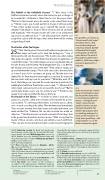
This parable is also known as “the wise and foolish virgins.” All of them went to sleep because the bridegroom’s arrival was delayed. But half of them had the foresight
to bring extra oil, while the others did not. The point of the parable is patience and readiness: like the wise virgins, we must be prepared for a long wait.
25:14
In the ancient world, a “talent” was a unit of weight or value. But the parable clearly refers to more important gifts than money—our English word “talent” comes from this parable. God does not give
all people equal gifts and abilities. But God gives all of us something and expects a return on the investment. It is a holy and a good thing—and a responsibility—to use the talents we have been given.
* [24:51] Punish him severely: the Greek verb, found in the New Testament only here and in the Lucan parallel (Lk 12:46), means, literally, “cut in two.” With the hypocrites: see note on Mt 6:2. Matthew classes the unfaithful Christian leader with the unbelieving leaders of Judaism. Wailing and grinding of teeth: see note on Mt 8:11–12.
* [25:1–13] Peculiar to Matthew.
* [25:1] Then: at the time of the parousia. Kingdom. . .will be
like: see note on Mt 13:24–30.
* [25:2–4] Foolish. . .wise: cf. the contrasted “wise man” and “fool”
of Mt 7:24, 26 where the two are distinguished by good deeds and lack of them, and such deeds may be signi ed by the oil of this parable.
* [25:11–12] Lord, Lord: cf. Mt 7:21. I do not know you: cf. Mt 7:23 where the Greek verb is di erent but synonymous.
*[25:13] Stay awake: some scholars see this command as an addition to the original parable of Matthew’s traditional material, since in Mt 25:5 all the virgins, wise and foolish, fall
asleep. But the wise virgins are adequately equipped for their task, and stay awake may mean no more than to be prepared; cf. Mt 24:42, 44.
* [25:14–30] Cf. Lk 19:12–27.
* [25:14] It will be as when. . .journey: literally, “For just as a man
who was going on a journey.” Although the comparison is not completed, the sense is clear; the kingdom of heaven is like the situation here described. Faithful use of one’s gifts will lead to participation in the fullness of the kingdom, lazy inactivity to exclusion from it.
* [25:15] Talents: see note on Mt 18:24.
* [25:18] Buried his master’s money: see note on Mt 13:44.
* [25:20–23] Although the rst two servants have received and
doubled large sums, their faithful trading is regarded by the master as delity in small matters only, compared with the great responsibilities now to be given to them. The latter are unspeci ed. Share your master’s joy: probably the joy of the banquet of the kingdom; cf. Mt 8:11.
Chapter 24
lu. [24:45–51] Lk 12:41–46. v. [24:51] 13:42; 25:30.
Chapter 25
a. [25:11–12] 7:21, 23; Lk 13:25–27. b. [25:13] 24:42; Mk 13:33.
c. [25:14–30] Lk 19:12–27.
65


